Bishop’s Interview Timeline

[Updated with specific language for the different years from the 1930’s forward in response to Joseph Bishop MTC sex scandal – 3/27/2018]

1830-1840 – Biography of Edward Partridge shows no evidence of temple interviews whatsoever. A recommend is set up by revelation to go to the land of zion, but it is a financial qualification recommend, on 12 November, 1831

1830 – In 1830, on average, Americans consumed 1.7 bottles of hard liquor per week, three times the amount consumed in 2010.

1846 – Maine becomes first state to have statewide prohibition

29 May, 1832 A recommend is required to go up to Zion. This recommend is barely spiritual, but far more financial in nature.

The saints will remember that the bishop in the land of Zion will not receive any, as wise stewards, without they bring a recommend from the bishop in Ohio, or from three elders. The elders, therefore, will be careful not to recommend and send up churches to this place without first receiving information from the bishop in Ohio, or in the land of Zion, that they can be accommodated when they arrive so as to be settled without confusion, which would produce pestilence.

1854 Joseph F. Smith was sent on a mission to avoid legal issues as he had beat up the schoolmaster and likely took up drink and tobacco. There was no interview with a bishop, and he would not have passed if there had been one.

1856-1857 –  “During the reformation (LDS) of 1856-1857, bishops and teachers saw to the catechizations interviews, and rebaptism of members.” Everyone is asked to “recommit” to the church. This is the beginning of the “worthiness interview” as we know it.

Some of the early questions were: Have you Murdered anyone in Cold-Blood? Have you knowingly branded another persons cattle or livestock? Have you plowed or harvested grain from a field that was not your own? Do you, and your family, wash or bathe as regularly as you are able?

1856 – Temple recommend questions. The First Presidency sent a letter stating that those recommended by local leaders should:

be those who pray, who pay their tithing from year to year; who live the lives of saints from day to day; setting good examples before their neighbors. Men and women, boys and girls over 16 years of age who are living the lives of saints, believer in the plurality [plural marriage], and do not speak evil of the authorities of the Church, and possess true integrity towards their friends (Spring 1998. History of LDS Temple Admission Standards. The Journal of Mormon History. 135-175).

There was no temple in Utah yet, so the questions were simply asked by home teachers as part of the reformation.

1857 – First list of questions drafted and used to qualify whether an individual could enter the Endowment House.


1879 – Image of a recommend from this time period featured prominently on this blog.

1883 – School of prophets decried masturbation (self pollution) as a poor substitute for polygamy (1981. Salt Lake City School of the Prophets Minute Book, 1883. Palm Desert: ULC Press, 54).

1886 – The First Presidency instructed, among other things, that it is “inconsistent to carry the smell of whiskey and tobacco into the sacred precincts of the Lord’s House” (Spring 1998. History of LDS Temple Admission Standards. The Journal of Mormon History. 135-175).

Tithing was made a requirement for a temple recommend at about the same time, if not in the same letter.

1889 Anson Bowen Call got all the way to the temple engaged to a second wife, without having instruction from a bishop. No interviews are mentioned, or his third and fourth wives after the manifesto would surely have come up.

5 May, 1898  The First Presidency and Twelve discussed the Word of Wisdom. One member read, from the twelfth volume of the Journal of Discourses, a statement by Brigham Young that seemed to support the notion that the Word of Wisdom was a commandment of God. Lorenzo Snow, then President of the Council of the Twelve agreed, saying that he believed the Word of Wisdom was a commandment and that it should be carried out to the letter. There was no definite action except to prohibit eating too much meat. http://www.dialoguejournal.com/wp-content/uploads/sbi/articles/Dialogue_V14N03_80.pdf

1899Lorenzo Snow went on a tithing raising tour throughout southern Utah. Tithing was reemphasized for temple attendance (St. George temple, Logan Temple, and Salt Lake temple were the only ones in operation at this time).

11 May, 1900 – Interview for second anointing text:

Now with regard to your full blessings[,] you will have to see Bro. [Anthony W.] Ivins [president of the Colonia Juarez Stake] and get your recommends to the blessings of the House of the Lord for your full blessings. They will have to be endorsed by Pres[iden]t [Lorenzo] Snow, which I shall be pleased to get for you[,] and that will all be O.K. for you all to get your blessings. Anything I can do for you at any time I shall be happy to do. — George Teasdale to Joseph C. Bently, May 11, 1900 in Joseph T. Bentley, Life and Letters of Joseph C. Bentley: A Biography (Provo: By the Author, 1977), 108.

June 1902 – William Clayton writes:

[T]he practice of masturbation was indulged in by many young people in the church schools. Pres. Smith remarked that this was a most damnable and pernicious practice, and the face of every apostle, president of a stake, and high councillor [sic] should be set as flint against it. The priesthood should be called together at the stake conferences and the brethren and parents should be instructed and warned in relation to this matter.” (Larson, S. A Ministry of Meetings: The Apostolic Diaries of Rudger Clawson, p. 411.)

See also the counsel of Reed Smoot at a similar meeting on pg. 414, where it was called a “secret vice.” The Word of Wisdom was added to the official temple requirements at this point. The First Presidency and Twelve agreed not to fellowship anyone who operated or frequented saloons. Old men were given a pass, and drunkards would be disfellowshipped.

mid-1905 Members of the Twelve were actively using Stake Conference
visits to promote adherence to the Word of Wisdom.

President Joseph F. Smith instructs that sealings for the dead cannot be performed except for those who were married in life. Also, ordinances for the dead are not to be performed for those who committed murder, suicide, or were excommunicates except by permission of the temple president. (See “LDS Temple Worship” by Anderson)

July 5, 1906 – the First Presidency and Twelve substituted water for wine in the sacrament in their temple meetings, apparently beginning July 5, 1906 (Dialogue, vol. 14, no. 3, Autumn, 1981, p. 79)

May 26, 1908North Carolina enacts statewide prohibition, first southern state to do so

5 January, 1908  Richard W. Young, president of the Ensign Stake, and Joseph F. Smith both endorsed Prohibition (Edward H. Anderson, “Events and Comments,” Improvement Era, January, 1908, pp.234-36; Lund Journal, January 3, 1908; Grant Diary, January 5, 1908).

28 December, 1915 – President Smith said in a letter that young “or middle-aged men
who have had experience in the Church should not be ordained to the Priesthood nor recommended to the privileges of the House of the Lord unless they
will abstain from the use of tobacco and intoxicating drinks.”

1917 – Utah had outlawed alcohol, and tobacco became the focus of the Word of Wisdom  (Joseph F. Smith to C. Elmo Cluff, December 28, 1915, Joseph F. Smith Letterbooks, ChurchArchives; Improvement Era, March 16, 1916, p. 461; ibid., April, 1917, pp. 555-58; ibid., Novem-88 I DIALOGUE: A Journal of Mormon Thought October, 1917, pp. 11, 64; ibid., March 1919, pp. 371-80; Relief Society Magazine, February, 1918, p.160; April, 1919, pp. 238-39; February, 1918, p. 146; September, 1919, pp. 527, 593).

1918 – Heber J. Grant becomes prophet.

October 28, 1919 –  Volstead Act passes stating that beer, wine, or other intoxicating malt or vinous liquors” meant any beverage that was more than 0.5% alcohol by volume. The Act also stated that owning any item designed to manufacture alcohol was illegal and it set specific fines and jail sentences for violating Prohibition.

1921  Church leadership made adherence to the Word of Wisdom a requirement for admission to the temple. Before this stake presidents and bishops had been encouraged to in this matter, but exceptions had been made. (Dialogue, page 82)

March 1921 – Members turned away from the temple for tobacco use.

1921 and 1933 – The adherence to the Word of Wisdom for full fellowship in the Church was made even more explicit in manuals and talks.

1934 –  “It is important that all those who may desire to enter the temple for endowments or other ordinances, should observe the law of tithing. The applicant should also observe all other principles of the Gospel, should keep the Word of Wisdom, not use profanity, should not join nor be a member of any secret oath-bound organization and should sustain without reservation the general and local authorities of the church.” (Handbook of Instructions 1934)

1928 – General Handbook of Instructions says that tithing should be encouraged by bishops for those wishing to attend the temple. http://www.dialoguejournal.com/wp-content/uploads/sbi/articles/Dialogue_V14N03_80.pdf

January 1930 – Heber J. Grant says that young men going on missions are not to use tobacco (JH, January 29, April 9, and June 8, 1930; Improvement Era, August, 1930, pp. 659-60).

1933 – General Handbook makes tithing non-optional, requiring prior observance of the principle of tithing as well as:  

The applicant should also observe all other principles of the Gospel, should keep the Word of Wisdom, not use profanity, should not join nor be a member of any secret oath bound organization and should sustain without reservation the general and local authorities of the church. http://www.dialoguejournal.com/wp-content/uploads/sbi/articles/Dialogue_V14N03_80.pdf

1934 – Bootlegging and liquor drinking listed in General Handbook as offenses worthy of a Bishop’s Court. http://www.dialoguejournal.com/wp-content/uploads/sbi/articles/Dialogue_V14N03_80.pdf

1941Recommend questions (link broken).

“[Recommends] are not to be issued to persons who do not sustain the General Authorities of the Church; who are not honest tithepayers or who do not undertake to become honest tithepayers, as distinguished from part tithepayers or token payers; who do not observe the Word of Wisdom or express a willingness to undertake to observe the Word of Wisdom; and who are not otherwise fully worthy by believing in and living the gospel…” (Handbook of Instructions, 1944)

1956 Masturbation was not mentioned in General Conference until 1956, where it was referred to as “self-abuse” (Delbert L. Stapley, Conference Report, October 1956, Afternoon Meeting pg. 121).

1930s-1960s Since ward teachers were ward officers and personal representatives of the bishop, the bishopric personally selected and interviewed the ward teachers, and conducted monthly report meetings with them.

With the introduction of the Welfare Services program in the late 1930s, bishops established and operated ward welfare projects and mobilized ward support for stake projects. http://eom.byu.edu/index.php/Bishop,_History_of_the_Office

“Considered a letter…about issuing temple recommends to non-tithe payers. I explained that people who go to the temple should be full tithe payers and should observe the Word of Wisdom; that as a matter of fact, it is a question of their faith. Men who have a testimony of the Gospel and believe it should contribute to it and if they fail to keep their promise to observe these commandments the Bishop has a right to withhold the recommend, not wholly on the failure to pay tithing but because of their lack of faith in the Gospel. Their failure to pay tithing would indicate their lack of faith in the Gospel.” (David O. McKay diary, July 9, 1954)

1960s – To help new bishops, the church published a wide array of instruction manuals for its various organizations and activities. By the 1980s, new bishops in the United States received several such manuals, a General Handbook of Instructions, and various priesthood guidebooks. http://eom.byu.edu/index.php/Bishop,_History_of_the_Office

“No person should receive a recommend for any purpose unless he is believed to be worthy in every respect. Unworthiness disqualifies him. Before issuing recommends bishops will assure themselves by searching inquiry that the recipients are free from all kinds of immoral practices; that they have no affiliation, in sympathy or otherwise, with any of the apostate groups that are running counter to the established order of the Church; that they sustain local and General Authorities of the Church; are full tithepayers, or will covenant to become such; that they observe the Word of Wisdom, abstaining from tea, coffee, tobacco, and liquor; and that they are fully worthy as evidenced by their observance of the whole gospel law including abiding by all conditions of their temple obligations.” (General Handbook of Instructions, Number 18 1960)

1964 – As part of a new church emphasis on correlation, “ward teaching,” now known as home teaching, became a responsibility of Melchizedek priesthood quorum leaders. http://eom.byu.edu/index.php/Bishop,_History_of_the_Office

August 30th, 1966 – 1st Presidency announces to stake presidents and missions that those who work at casinos are not to have administrative callings or temple recommends.

1970s – “Honest in your dealings with your fellow man” added.

February 12, 1971

“A searching interview should be conducted by the bishop and also by the stake president to determine whether or not—1. The applicant has a testimony of the Gospel. 2. He supports local and General Authorities. 3. Accepts and follows the teachings and programs of the Church. 4. Keep[s] the Word of Wisdom, uses drugs. 5. He is morally clean—free from adultery, fornication, homosexuality. 6. He is in good standing in the Church. 7. He is free from legal entanglements.” (1st Presidency letter)

1976- “Before issuing a recommend the bishop will assure himself by searching inquiry of the worthiness of the applicant in relation to the standards and principles of the Church. These may include the following questions:

  • 1. Are you morally clean and worthy to enter the temple?
  • 2. Will you and do you sustain the local and General Authorities of the Church, and will you live in accordance with the accepted rules and doctrines of the Church?
  • 3. Do you have any connection, in sympathy or otherwise, with any of the apostate groups or individuals who are running counter to the accepted rules and doctrines of the Church?
  • 4. Are you a full tithe payer?
  • 5. Are you honest in your dealings with your fellowmen?
  • 6. Do you keep the Word of Wisdom?
  • 7. Do you wear the regulation garments?
  • 8. Will you earnestly strive to do your duty in the Church; to attend your sacrament, priesthood, and other meetings; and to obey the rules, laws, and commandments of the gospel?
  • 9. Have you ever been denied a recommend to any temple?
  • 10. Have you ever been divorced?
  • 11. Has there ever been a major transgression in your life that has not been confessed and adjusted?” (General Handbook of Instructions 1976)

1978 N. Eldon Tanner gave a talk mentioning that when his father was a bishop, he could not tell if it was a father’s interview or a bishop’s interview. Interviews have a specific purpose: “interview whether a man is worthy for advancement in the priesthood, worthy to fill a mission, or worthy to go to the temple.”

No standard questions were mentioned, but vague attempts to “determine through discussion with him what the Lord would want as an ambassador to represent Him and His church. Let him explain, for instance, what the Lord would want in a missionary with regard to the Word of Wisdom, with regard to morality, honesty, dependability, tithing, obedience, devotion, etc.” are suggested.

Serious transgressions must go to a General Authority.

There is mention of asking “those questions.”

“It is not in order for a priesthood leader to list in detail ugly, deviant, or bestial practices and then cross-examine a member of the Church as to whether or not such things are practiced.”

1978 – The First Presidency added a statement to the temple recommend questions that indicated that those who had not repented of “impure, unholy, or unnatural sex acts” could not receive a recommend (First Presidency letter, June 9, 1976, Church Archives; General Handbook of Instructions, supp. 3 to #21 [March 1, 1978], pg. 4 as cited in Kimball, E. L [2005] Lengthen Your Stride, Working Draft).

1980s – The church consolidated all ward meetings, previously spread throughout the week, into one, three-hour block on Sunday. http://eom.byu.edu/index.php/Bishop,_History_of_the_Office

1980s – The church adds child support and alimony to the temple recommend questions. (personal interviews with church leaders)

1980 – BYU now requires a bishop’s interview.

January 5, 1982 – Oral sex named as an act that would deny one a recommend even in marriage

“Married persons should understand that if in their marital relations they are guilty of unnatural, impure, or unholy practices, they should not enter the temple unless and until they repent and discontinue any such practices….The First Presidency has interpreted oral sex as constituting an unnatural, impure, or unholy practice.” (First Presidency letter)

October 15, 1982 – The First Presidency sent a letter  recinding the ban on oral sex stating that bishops,

“should never inquire into personal, intimate matters involving marital relations between man and his wife.” This counsel is still contained in temple recommend instructions (Kimball, E. L. [1998] The History of LDS Temple Admission Standards. Journal of Mormon History Spring pg. 135-175).

November 1982 – L. Tom Perry gave first satellite broadcast, a talk titled, “For a Bishop Must Be Blameless.” In the talk, he mentioned that he sat on a committee to revamp the duties of a bishop. More than likely, the bishop’s interview was revamped at this time to be a standard set of questions.

1985The temple recommend question was simplified to, “Do you live the law of Chastity?” from “unnatural acts.”

June 1986 – “Your Friend the Bishop” printed in New Era in 1986. The article explains that a bishop’s interview is something to look forward to, and that back when “priesthood meeting was in the morning, and sacrament meeting was much later in the day,” the speaker saw an interview with a bishop. The interview described was a welfare visit, and is placed in the 1950s time frame. The interview with the teen is unstructured, and certainly has nothing to do with sexual purity. Despite being requoted by Henry Eyring in 2002, the original text of this article in the New Era is NOT available on LDS.org.

The article states, “My bishop never interviewed me the same way twice, and your bishop will be inspired as he interviews you. There isn’t a fixed set of questions.”

April 1987 – “No Shortcuts,” a talk by Robert L. Simpson, indicates that priesthood interviews are not a violation of agency. Has a priest state as much to show how clear that concept is.

1987 Yearly bishop’s interviews required for BYU students.

April 1990 – Hinckley included “the demand [of] offensive intimate relations” in the definition of abuse during the priesthood session of General Conference.

April 1991 – L. Tom Perry gave talk about interviews in which he described his first interview with his father, the bishop: “The interview resulted in a little scripture study between myself and my father.

2 July, 1991 – “[R]itualist child abuse” memo surfaces from Bishop Pace. Interviews conducted in 1989-1990 could have influenced temple ritual modifications.

1992 – The Liahona featured an article selling the ideas of the interview, and confessing in confidence, to kids.

1996 – The first question about a belief in God, Jesus Christ, and the Holy Ghost was split into three questions. A second question was modified to ask if the member sustained the First Presidency and Quorum of the Twelve as prophets, seers, and revelators. The question about wearing the garments was qualified– a clause was added about wearing them as instructed in the temple.

1998 – General Handbook published stating that, “sexual relations within marriage are divinely approved not only for the purpose of procreation, but also as a means of expressing love and strengthening emotional and spiritual bonds between husband and wife.” Extra-marital petting and masturbation are not mentioned specifically in the General Handbook of Instruction. Pornography was added. (Source 1998 copy of the GHI]

1999A simplified question about financial obligations was asked of all members, not just divorced members.

2000 Book of Mormon study guide announced Alma 45 is a bishop/father’s interview.

21 January, 2004 – 2004 BYU NewsNet article (now BYU Universe), “LDS Church [is] not opposed to birth control.”

2012 The question about wearing garments was slightly modified to clarify that the garments should not be worn separately.

Posted in Timelines | 1 Comment

G.A. Richard Lyman found in bed with another woman (adultery)

This one is pretty simple. They do excommunicate him and are really quite ashamed. However, it did happened, and it is pretty much hushed up. The Examiner story covers the details well.

http://blogs.standard.net/the-political-surf/2012/04/02/police-no-knock-raid-caught-an-lds-apostle-in-another-womans-bed/

Posted in GA Bullsh*t | Leave a comment

Critical Thinking, Logic, and Skepticism for Children Course: Lesson 4 (Patterns)

Opening song:

If there’s a question bothering your brain                                                                              That you think you know how to explain                                                                                You need a test                                                                                                                            Yeah, think up a test

If it’s possible to prove it wrong                                                                                            You’re going to want to know before too long                                                                    You’ll need a test

If somebody says they figured it out                                                                                         And they’re leaving any room for doubt                                                                               Come up with a test                                                                                                                  Yeah, you need a test

Are you sure that that thing is true?                                                                                           Or did someone just tell it to you?                                                                                           Come up with a test

Test it out

Find a way to show what would happen                                                                                     If you were incorrect                                                                                                                  (Test it out)

A fact is just a fantasy                                                                                                             Unless it can be checked                                                                                                           Make a test                                                                                                                                      Test it out

If you want to know if it’s the truth                                                                                              Then, my friend, you are going to need proof                                                                      Come up with a test                                                                                                                          Yeah, you need a test

Don’t believe it ’cause they say it’s so                                                                                            If it’s not true, you have a right to know                                                                                  Put it to the test (put it to the test)                                                                                           Yeah, test it out (put it to the test)                                                                                         Yeah, put it to the test (put it to the test)                                                                                  Put it to the test (put it to the test)

Lesson 4:

Mistakes, errors and failures are how we learn. We must be willing to be wrong, but also identify when we are wrong and willing to correct our mistakes in order to move forward.

http://www.history.com/topics/thomas-edison/videos#thomas-edison  Start at 0:58.

Edison had a vision and wanted to succeed, but he was willing to move through mistakes.  In the movie “Meet The Robertsons,” failure is celebrated as long as one learns something:

http://www.youtube.com/watch?v=7p_eKV3SzwE

In most schools and work environments today, failure is something scary. It is something to be avoided and shunned. No one wants to be on a failing team. Something we need to realize out of this class is how important it is that we fail during practice time, learn, and turn that learning into forward progress.

Fallacies:

There are many ways that humans say things that sound logical, but they are failures, mistakes, and errors. We talked about them a bit during the last class:

http://www.youtube.com/watch?v=kgdDK4XMpm0

We must learn to recognize fallacies, identify them, and correct them if we are to make logical arguments.

ACTIVITY:

Identify what is flawed about these statements:

1. If it weren’t for the president’s environmental policy, we wouldn’t be dealing with these environmental catastrophes.

2. It’s disgraceful that a member of the Elks Lodge would go out to fast food restaurants every night. The Elks believe in family values, including home-cooked meals.

3. Sure, I’ve heard that its better to not eat cheeseburgers every day, but it’s extra protein and protein is good for you.

Fallacies for the day:

Ad Hominem– “Ad Hominem” means “against the man” or “against the person.”

In other words, attacking the man instead of the argument.

Example: Janie said George Washington was the first president, but she’s a blond. What does she know?

Straw man– The Straw man fallacy is committed when a person simply ignores a person’s actual position and substitutes a distorted, exaggerated, or misrepresented version of that position.

This sort of “reasoning” has the following pattern:

  1. Person A has position X.

  2. Person B presents position Y (which is a distorted version of X).

  3. Person B attacks position Y.

  4. Therefore X is false/incorrect/flawed.

This was shown in this example last time:

Bill and Jill are arguing about cleaning out their closets.

Jill: “We should clean out the closets. They are getting a bit messy.”

Bill: “Why, we just went through those closets last year. Do we have to clean them out everyday?”

Jill: “I never said anything about cleaning them out every day. You just want too keep all your junk forever, which is just ridiculous.”

Two wrongs make a right- Two Wrongs Make a Right is a fallacy in which a person “justifies” an action against a person by asserting that the person would do the same thing to him/her, when the action is not necessary to prevent B from doing X to A. This fallacy has the following pattern of “reasoning”:

It is claimed that person B would do X to person A.

It is acceptable for person A to do X to person B (when A’s doing X to B is not necessary to prevent B from doing X to A).

Examples:

Bill has borrowed Jane’s expensive pen, but found he didn’t return it. He tells himself that it is okay to keep it since she would have taken his.

After leaving a store, Jill notices that she has underpaid by $10. She decides not to return the money to the store because if she had overpaid, they would not have returned the money.

Homework:

Write 3 wrong statements. Intentionally making mistakes is not only fun, but it teaches our brains to look for those mistakes in the future.

Write one ad hominem argument.

Write one straw man argument.

Write one “two wrongs make a right” argument.
If they start to, let the children play out these fallacies with each other. They will probably giggle and laugh at how silly it is to make these mistakes intentionally. That’s absolutely fine.

Posted in Critical Thinking course for Kids | Leave a comment

Critical Thinking, Logic, and Skepticism for Children Course: Lesson 3 (Types of Reasoning)

Lesson 3:

Review Homework.  Let each child read their essay, and explain how it felt to think as someone else.

Inductive and Deductive Reasoning:

The Premise:

A premise is a statement that an argument claims will induce or justify a conclusion.[1] In other words, a premise is an assumption that something is true. In logic, an argument requires a set of at least two declarative sentences (or “propositions”), known as the premises, along with another declarative sentence (or “proposition”), known as the conclusion. This structure of two premises and one conclusion forms the basic argumentative structure.

http://www.youtube.com/watch?feature=player_embedded&v=VRZk62QNOsM

The Fallacy:

A fallacy is a deceptive, misleading, false notion or belief (can be based on true statements in the wrong order).

An informal fallacy is an error in reasoning that does not originate in improper logical form. The logic may be perfectly deductive or inductive, but the conclusion false.

Example:

Earth is a planet.

All planets revolve around a star.

The earth revolves around the sun.

Therefore, the sun is a star.


Bad example:

All dogs have four feet.

It has four feet.

Therefore, it is a dog.


Inductive Reasoning:

Inductive reasoning is a kind of reasoning that constructs or evaluates general propositions that are derived from specific examples. Inductive reasoning contrasts with deductive reasoning, in which specific examples are derived from general propositions.

Example:  All the tigers observed in a particular region have yellow stripes. Therefore, all the tigers native to this region have yellow stripes.

Visual example:

Look at the patterns below. Can you draw the next figure or next set of dots using inductive reasoning?

The answer should look like this:

Example:

The sun has risen every day in recorded history.

Therefore, the sun will rise tomorrow.

Weak Example:

Everyone I know loves Batman.

I know you.

You must love Batman.


You always wear purple shirts.

The next time I see you, you will be wearing a purple shirt.

‘Being rational’ is to act upon reason or understanding. Rational explanation or rational behavior is an act where the explanation/behavior is based on hard facts which do not change according to the whims and fancy of the ‘rational’ person.

Rationalization, on the other hand involves the twisting and distortion of facts and reasoning to suit your own purposes (in the objective world, this is called cheating).

Rational:  I am hungry.  I have eaten my vegetables, meat, and dinner. I like cookies.  There is a cookie for me. Therefore, I should eat a cookie.

Rationalizing: I ate the cookie because I need cookies to keep me strong.

http://www.youtube.com/watch?v=9b3KM2p1nHs

Activity:  

Identify the premise, any fallacies, and whether the statements are deductive or inductive.

1)  “Senator Jones suggests reducing the attack submarine program. I disagree entirely. I can’t understand why he wants to leave us defenseless like that.”

2) Bill and Jill are arguing about cleaning out their closets:

Jill: “We should clean out the closets. They are getting a bit messy.”

Bill: “Why, we just went through those closets last year. Do we have to clean them out everyday?”

Jill: “I never said anything about cleaning them out every day. You just want too keep all your junk forever, which is just ridiculous.”


3) Every time Dorothy drinks milk, she gets a rash around her mouth. Therefore, milk causes a rash on Dorothy.

4) “When chimpanzees are exposed to rage, they tend to become violent. Humans are similar to chimpanzees, and therefore, they tend to get violent when exposed to rage.”

5) The dog would have barked if it saw a stranger. It didn’t bark, so it didn’t see a stranger.

Inductive and deductive thinking are difficult even for adults. Many adults make mistakes in rational thinking all the time.  In fact, in the media you can often see many fallacies made by politicians, advertisers, and others who are highly respected. You don’t have to be perfect at this, but you will be more successful the better you get at deductive and inductive thinking.

Homework:

Observe a conversation between two people.  Write down the statements that push for a conclusion. Identify the premises used. Identify if they person used inductive or deductive thinking.  Identify any fallacies.

Media examples of bad induction and deduction, faulty premise, and fallacies:

http://www.youtube.com/watch?v=sT_VhDrn8NY

http://www.youtube.com/watch?v=LKQiGjYu_6w

Conclusion:

We will all be better able to identify rational decisions and not be misled by practicing inductive and deductive reasoning. It takes practice as these ideas are hard for everyone.  The benefits of learning it outweigh the costs of effort.

Posted in Critical Thinking course for Kids | Leave a comment

Ezra T. Benson and the marketing gimmick

In October of 1988, Ezra T. Benson, then prophet of the church, gave a speech that would become the defining characteristic of his presidency.

The talk was entitled “Flooding the Earth with the Book of Mormon.”

I was but a wee lad at the time, and so I recall having a primary activity where we wrote down our testimonies on paper, glued them into copies of the Book of Mormon, and sent them off to missionaries around the world to fulfill this prophesy.

When I served my mission, I discovered an astonishing thing– every apartment had stacks of these English copies of the Book of Mormon from this era, with testimonies in the front covers.

These testimonies are so common that you can find them on the internet. Go to Deseret Industries and pick up a few copies, and you’ll find a few of these on any given day. My house has 6.

It would only be after I came home that I would learn this was not unique to my mission, but, in fact, is pretty much the case across most missions.

What happened? Most of this explanation comes from various reviews of Daymon Smith’s Book of Mammon. To be clear, Daymon Smith was an anthropologist at the Church Office Building for 15 years. He knows his stuff, and had a very intimate look at the workings of the church:

  • In 1981, the LDS Church released the ‘Quad’–a combination scripture set (complete with footnotes and chapter headings) that many Mormons use today. Initially, sales for the new scriptures were sluggish. The CEO of Deseret Book worried that the new emphasis on Jesus was to blame (the 1981 edition of the Book of Mormon was subtitled, “Another Testament of Jesus Christ”). The more likely culprit was Deseret Book itself, which heavily advertised the pricey leather-bound sets to the exclusion of cheaper ones.
  •  The warehouse suddenly had a lot of old copies of the Book of Mormon no one wanted to buy. Everyone wanted a quad with the fancy features.
  • The warehouses refused to take in the new quads until the old copies of the Book of Mormon were sold. Doing otherwise would mean they’d take a loss.

You see, even though the church is a behemoth organization, each sub-organization operates independently. The warehouse would take a loss if the books gathered dust (warehouse space taken up is a cost in logistics calculations), and if the church bought them to free up the warehouse, that would be “inappropriately using tithing funds.” Since Deseret Book is “for profit,” they couldn’t be expected to eat the costs.

Then one day, an enterprising young lad/lass in marketing had a thought, and it was agreed to.  “Have the members buy up the books.” Just because they paid for the initial printing of the book, and for the books to go to the warehouse, it didn’t mean you couldn’t charge members again for the same books.

  • Local ward and stake budgets (including the primary budget, where I was) used the money to buy up copies of the Book of Mormon to send out instead of on local members and activities.
  • The missionaries received tons of old books that they couldn’t possibly give out.  Sometimes they built furniture out of the books, just to give you an idea of the volume.

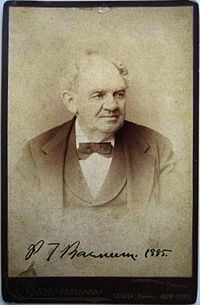
Elder P.T. Barnum said, “There is a new member of the church born every minute.”

So why does this matter? It matters because the prophet spoke a message at the pulpit that equated to “the members are suckers, make them pay,” and it is still the defining message of his presidency. A warehouse logistics issue, and some stubborn managers not willing to take a loss, pushed members to open their pocket books.

That precedent should disturb any member.

Posted in GA Bullsh*t | 4 Comments

Our own peek into the First Presidency vault

On postmormon.org and mormoncurtain.com there is a list of items found in the First Presidency vault. This list is every item on that list, linked to any document outside the vault (scan, photo reproduction, or, in some cases, a BYU article about what is in the vault), along with a brief description.

An Address by Way of an Abridged Account and Journal of My Life, Lyman Wight– George Miller’s committee describing how he was part of the Council of Fifty, and had a special mission from Joseph Smith. This is his testimony that Brigham Young is apostate and that Lyman Wight was correct, before he joined the Strangites about two years later.

Continue reading

Posted in Apologetics, Correlation, Early Church History (1800s), Fundamentalist Church of Jesus Christ of Latter Day Saints | 11 Comments

Wilford Woodruff pants on fire: Pure Mormonism exposes old time GA BS

http://puremormonism.blogspot.com/2013/04/wilford-woodruffs-pants-are-on-fire.html

The basic upshot is that the founding fathers had their work done for them multiple times before they appeared to Wilford Woodruff. In other words, Wilford was caught in a blatant lie.

Kudos to Pure Mormonism for finding this.

Posted in GA Bullsh*t | Leave a comment

Benson Bullsh*t: Grab your gun and fight the commies


Ezra T. Benson

President Benson is typically listed as being the “Secretary of Agriculture under Eisenhower” by the church, in order to lend his presidency credibility. While this is true, this doesn’t incorporate the full story of Benson.

Benson was a member of the John Birch Society, which focused on surviving the Communist threat. Think “Red Dawn” (The Patrick Swayze version).

“Those kids are like the Mujahidin Freedom Fighters led by Bin Laden” (Paraphrase of two lines from the movie).

It was led by Robert Welch, Jr., a retired candy manufacturer from Belmont, Massachusetts. Welch named the new organization after John Birch, an American Baptist missionary and United States military intelligence officer who had been shot by communist forces in China in August 1945.

Welch wrote in a widely circulated statement, The Politician,

“Could Eisenhower really be simply a smart politician, entirely without principles and hungry for glory, who is only the tool of the Communists? The answer is yes.” He went on. “With regard to … Eisenhower, it is difficult to avoid raising the question of deliberate treason” (Quoted at “Glenn Beck talks with JBS President John F. McManus” Aug. 15, 2006).

Interestingly enough, after this was published, Benson tried to turn Eisenhower in to Hoover as a communist. Then, Benson tried to get Hoover a spot to speak at General Conference. This is likely during the period where J. Edgar Hoover was having an affair with a senior staff at the FBI, although Hoover’s sexuality is still being debated by scholars.

Regardless, this puts Ezra Taft Benson clearly in control of Welch’s mindset because, before this, Benson had asked permission from the First Presidency to serve as an ambassador, showing that he respected Eisenhower and the Prophet.

Last evening, October, 1957, Elder Ezra Taft Benson called me by telephone at my home and asked whether or not he should accept a government appointment to go to Rome, Italy. The American Ambassador to Italy there would like to arrange a conference for him with the Pope. I told Brother Benson that I would talk with my counselors this morning and then let him know” (David O. McKay Diaries, Wednesday, October 2, 1957).

In March, 1961, the John Birch society begins opposing fluoridation programs.

On May 13,1972, the First Presidency sent a letter stating that, “fluoridation of public water supplies to prevent tooth decay” is one of the “non-moral issues” that Mormons should vote on “according to their honest convictions.”

Water fluoridation clearly is helpful in fighting cavities, but even in 2005, places like Tooele, Utah still fight fluoridation in large part because of these teachings.

Also, Ezra T. Benson quoted a John Birch Society book, “None Dare Call it Conspiracy” and promoted it during General Conference.

http://www.youtube.com/watch?v=pJNMcD2IY_k

During my time of learning about all of this (fluoridation was a big topic in my home because our water was not fluoridated, and my mother purchased fluoride pills in exact dosages for us. Our family has a history of poor dental care until the fluoride pills, then suddenly, no cavities), Star Trek the Next Generation came on, and a brief few seconds in the pilot episode “Encounter at Far Point” caught my attention:

“Looking for a few good men to stop the commies.”

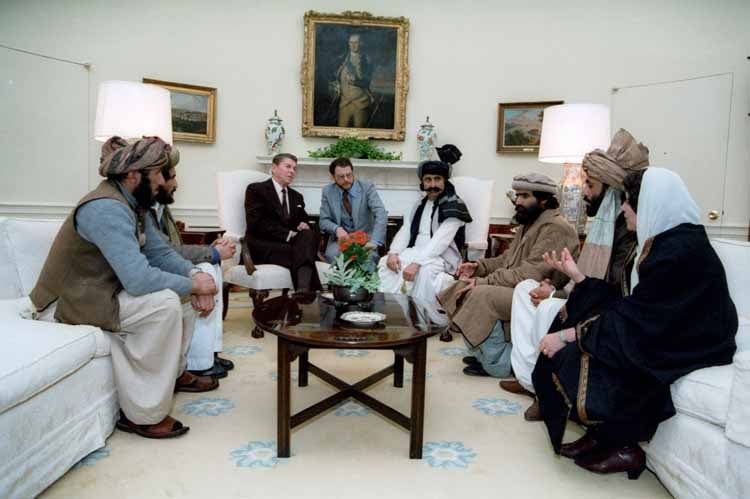
Suddenly, the idea of stopping the commies, so prevalent in the 80s, was silly– as ridiculous as the “forsooth” language Q was using a few seconds before in the episode. All of the rhetoric was just bizarre old men fear mongering. It was as silly as the movie Red Dawn appears today (no, I haven’t seen the remake). It’s as bizarre as seeing Osama Bin Laden’s Mujahidin in the Oval Office with Ronald Reagan.

Yup, that’s Reagan meeting with Osama’s men because he dedicated the Space Shuttle “Columbia” to them.


Posted in GA Bullsh*t | Leave a comment

A lack of evidence doesn’t show an evidence of lack: A new perspective

Often, when I begin discussing Mesoamerican details with members of the church, they say something similar to the following:

“We haven’t found gold in Mesoamerica…yet!

“Lack of evidence doesn’t mean an evidence of lack.We could still find horses in Pre-Columbian America.”

“The obsidian laced wooden swords may have come too late for the Book of Mormon people, but maybe there is more evidence to find.”

All of these arguments hinge upon the concept of a very good logical argument that states, “Simply because there isn’t any evidence right now, doesn’t mean there never will be evidence.” This is true. We haven’t found any evidence of alien life, but it would be a logical fallacy to imply that this means there isn’t any life form on any other planet.

However, this fallacy is talking about black box scenarios where we have no information.  When it comes to the points above, it turns out we have quite a bit of evidence, it just doesn’t point in the direction the apologist wants it to.

  • The obsidian laced wooden swords may have come too late for the Book of Mormon people, but maybe there is more evidence to find.

The issue with this claim is that we have lots of evidence of the weapons used by the Maya and other Mesoamerican cultures. It isn’t that we don’t know, it’s that none of the weapons are steel based or sword-like.

The sword the apologists claim is the sword in the Book of Mormon is the Macuahuitl:

A wooden club with obsidian on the sides that cuts like a sword.

The issues instantly arise when one reads the actual text in the Book of Mormon which claims that the Jaredites (From the tower of Babel, about 2000 B.C.) had steel swords:

…he did molten out of the hill, and made swords out of steel for those whom he had drawn away with him (Ether 7:9)

Not a wooden sword. To further complicate things, the Macuahuitl was an Aztec weapon, not a Mayan weapon. Unless the Nephites were really into human sacrifice and were founded and built in the wrong era, the Aztec empire doesn’t match.

But even more to the point, the Tepoztopilli (a spear with a paddle) can be seen over the years growing shorter in the handle, and longer in the blade. In short, we have lots of evidence of where the Macuahuitl came from, and none of it points to an introduction of advanced metallic technology which was later lost.

No lack of evidence.

Having a steel sword show up in 600 B.C. Mesoamerica would be something akin to this. Although fiction, the idea of the transformative nature of high technology suddenly appearing in a lower technology culture is well portrayed. The owner of the technology becomes suddenly dominant, and he rallies all the surrounding people into his cause.

  • We haven’t found gold in Mesoamerica… yet!

Gold working did not come to Mesoamerica until about 700 A.D.  That’s 300 years after Moroni buried the gold plates, 800 or so years after Amulek was offered ontis and senums of gold and silver, and about a thousand years after Noah made a throne of gold. See the issue?

This is Aztec gold with Mayan writing. Still way too late to apply to Book of Mormon people. Too bad the book wasn’t written on plates of jade.

The progression of gold working and metallurgy has been well documented. The age of various sites, locations, and how the technology impacted the social setting of the areas as it was passed along isn’t lacking in evidence. In fact, the evidence is abundant:

Metallurgy first appeared in Mesoamerica at about A.D. 800, introduced via a maritime route from Central and South America into West Mexico. During the initial period of the establishment of the technology (approximately A.D. 800 to between A.D. 1200 and 1300) technical links were closest with the metallurgies of Ecuador, Colombia, and lower Central America. During the second period of West Mexican metallurgy (A.D. 1200–1300 to the Spanish invasion) new elements from these same regional metallurgies were introduced, in addition to technical components from the metallurgy of southern Peru. Although the roots of West Mexican metallurgy lay in the metallurgies to the south, the elements that had been introduced from those areas were reinterpreted and transformed, resulting in the development of a technically original, highly inventive regional technology in West Mexico (Ancient West Mexican Metallurgy: South and Central American Origins and West Mexican Transformations).

I’ll say it in plain English: Gold working started in Peru, moved up the west coast to Ecuador, and didn’t show up in Mayan (or other cultures that the apologists tie to the Book of Mormon) until A.D. 700. From there it went into Mexico. No lack of evidence, as we can trace it from spot to spot over a very large time frame.

Just to be clear, all that gold that the Spaniards melted down came from long after the time of the Nephites. It was not Satan destroying the true records, or that God wanted all the other records hidden, or anything like that. Everything melted would have been apostate doctrines by that time anyway because the first writings possible on gold would have been 600 years after Moroni died.

  • Lack of evidence doesn’t mean an evidence of lack. We could still find horses in Pre-Columbian America.

This is where “bad ideas” turn into “outright fraud” or “gross negligence,” in my humble opinion.

For example, in this interview, Daniel C. Peterson says that the text of the Book of Mormon says nothing more than that they had horses, and that they fed them:

And they said unto him: Behold, he is feeding thy horses. Now the king had commanded his servants, previous to the time of the watering of their flocks, that they should prepare his horses and chariots, and conduct him forth to the land of Nephi… [emphasis added] (Alma 18:9).

And they also had horses, and asses, and there were elephants and cureloms and cumoms; all of which were useful unto man… [emphasis added] (Ether 9:19).

…the proclamation of Lachoneus had gone forth throughout all the face of the land, and they had taken their horses, and their chariots, and their cattle, and all their flocks, and their herds, and their grain, and all their substance, and did march forth by thousands and by tens of thousands, until they had all gone forth to the place which had been appointed… [emphasis added] (3 Nephi 3:22).

I kid you not, FAIR actually has this as a possible interpretation for “Horses and Chariots.”

Every time “horses” are mentioned in the text, their usefulness or chariots and movement of people are mentioned. It just seems dishonest to imply the text in no way implies the horses do things more than “be fed and owned.”

But that’s not the worst of it. In 2005, FARMS posted a video:

http://www.youtube.com/watch?v=qkydMSmv1Zo&feature=player_embedded

In this video it mentions a particular horse skull that was found at Spencer Lake. Now, this horse skull was a hoax, and the man responsible came forward and apologized. Why would FARMS use a skull that was a known hoax? Maybe they didn’t know it was a hoax?

This is the infamous horse skull.

In this case those conclusions are testable. In 2002, I was contacted by Dr. Stephen Jones of Brigham Young University, a researcher conducting a project on the antiquity of New World horses. He was willing to provide funds for dating the skull using accelerator mass spectrometery (AMS) in order to settle questions regarding the skull’s antiquity. A single sample was removed by MPM staff from the aboral margin of the jaw near the gonion caudale. It was separated into three subsamples, one held as a voucher and the others independently submitted to different radiocarbon labs (Beta Analytic and Stafford Research Laboratories) for AMS dating. The samples were of approximately the same size and yielded results in close agreement. Beta 167209 yielded an uncalibrated date of 110 +- 40 BP; Stafford SR6189 yielded an uncalibrated date of 190 +- 35 BP.

Wait… so Dr. Stephen Jones of BYU was the one who conclusively proved in 2002 that the skull wasn’t ancient? Three years before the religion department of BYU produced this video?

Mormons did not notice this book and the people involved in requesting the testing did not print the results for other Mormons to see. Science worked, a theory was proven wrong but the results were not published by those who had hoped for a different outcome.

Maybe the video was already made by 2002, and they just didn’t talk to the Physics department of BYU?

In 2008, a non LDS post graduate student informed FAIR of the error and provided them with the source for the 2004 radiocarbon results.

Ah, so they know this video is wrong, misleading, and based on a hoax, and yet they haven’t pulled the video, nor corrected it, let alone produce an apology for accepting bad evidence.

That pretty much indicates fraud.

So you see, it isn’t just a lack of evidence for the Book of Mormon. It is the scores of counter  evidence that apologists choose to ignore when they publish their arguments (and that the average member is unaware of).

Next time someone says something like the above statements, you are now well armed to say, “There is evidence, it just doesn’t agree with your conclusions. Can you tell me why I should dismiss any of the evidence that exists?”

Because really, we can’t let the use of logical fallacy stand, and if you can point out that the people who use these sort of claims are fraudulently lying to the person… then all the better.

Posted in Apologetics | 1 Comment

By their fruits ye shall know them (Dean L. Larsen)

This post comes from man_without_wax on reddit.  He picked up on this, and it was too good not to share:

“I’ve been thinking a lot about the phrase ‘by your fruits ye shall know them’ and how it is used in the church. In my experience the phrase is basically a cop-out/cover-up whenever a person (or entity) of some authority or standing commits a questionable act. This phrase has been used to defend Joseph Smith, Brigham Young, and the church itself. One such example is this talk by Dean L. Larsen of the presidency of the seventy” (https://www.lds.org/general-conference/1985/10/by-their-fruits-ye-shall-know-them?lang=eng). He states that some documents had surfaced (in 1985) that may cause people to question Joseph Smith. He says:

In my remarks today I do not wish to make any assessment of the validity of the newly discovered documents nor the extent to which they might, in the eyes of some, affect the reconstruction of Church history. I would like, instead, to point to some ultimate tests that can be applied to determine the divine nature of any religious work.

“Translation: ‘Let’s just ignore any negative evidence and only look at the evidence in our favor.’

“That’s so infuriating and sickening that it’s hard for me to even continue typing. The statement and its intent are so flawed it’s laughable. And yet, it’s still commonly used and believed as a defense.

“Here’s the issue. If I do 29 good things and 1 evil thing in a month, am I good or evil? Most of us would likely say good. What about 20 and 10? Still good? What about 15-15? By this statement I’m… neutral? Then, what about if I’m at 29 good things and 1 evil, but that 1 evil thing is REALLY evil. Then what? Which fruit are we to judge by? The statement oversimplifies things to the point of uselessness. If an evil tree can’t bring forth good fruit and vice versa, no one can be judged reliably by this statement except for Jesus and Satan, amirite?

“I’m sure Hitler did good things for people at some point in his life. I’m also sure Elder Holland has been a dick to people at some time in his life. Yet, when we talk about Joseph Smith, when we question his life/history/motives, we are told to judge by his fruits. WHICH FRUITS?! Bringing about the Book of Mormon gives you carte blanche for the rest of your life?! I’m sorry, that doesn’t fly with me. In fact it’s quite the opposite. I still find it hard to explain away the Book of Mormon, but when I look at the rest of Joseph’s life, all the other damning evidence, I can’t bring myself to believe that a man that terrible (or anything produced by him) can legitimately be of God.

“Same goes for the church. I know no person or organization will be perfect, but I’m not going to just ignore anything negative because ultimately the church has good teachings.

“The ends do not justify the means.”

I would like to add, that “I’m judging him by his fruits” is a great rebuttal to “That’s not doctrine, why waste your time with it,” or “That isn’t important to your salvation.” 

Posted in GA Bullsh*t | Leave a comment