Sixth Discussion – Exit Strategy

  • Follow up with your investigator on anything they previously committed to. This is a good time to ask them about their personal feelings about God and Jesus Christ. No answer is wrong, it’s good just to listen.

Thank you for having us back. Many individuals, when they have heard the things we have shared, want to know more. Today we’re going to cover further information and research on your own, as well as discuss some steps going forward.

As we share these things with you, we want you to be aware of your feelings as well as what you are thinking. We ask you to consider how you felt about knowing truth when we started, compared to the things we discuss today.

We respect your thoughts and feelings and invite you to share them with us.

Other Points of Research

We’ve only shared with you a handful of issues with the correlated story the church puts forward. There are many, many issues, some of them far more difficult to cope with, than what we have shared in these discussions. We are briefly going to mention a few of these and then invite you to do your own research or investigations. We will also be providing you with some tools to cope with information.

  • Note: Many individuals will have done their own research at this point. You can skip any of these points or delve deeper as your own judgement dictates.

The Book of Abraham

Members of the church were doubting if Joseph was a prophet. A man came into Nauvoo with papyri and a pair of Egyptian mummies. The members fetched Joseph Smith and asked him to translate the Egyptian to prove he was still a prophet. Joseph declared that the writings were written by Abraham, by his own hand, upon papyrus. The story of how this book clearly demonstrates that Joseph Smith fraudulently tried to convince the members of the church using these mummies, as well as how mormon scholars tried to cover the fraud, is available in this book[1].

The Kinderhook Plates

The Kinderhook Plates were another attempt to test if Joseph Smith was a genuine prophet. Men conspired to create false plates and then showed them to Joseph. Joseph declared them to be written by a descendant of Ham. The men then revealed that they had forged them to trick Joseph. Mormon scholars defended Joseph and discussed the plates until scientific processes declared them to be forgeries. Correlated manuals now make no mention of the Kinderhook plates. More information about these can be found here[2].

Succession

When Joseph Smith died, he had no clear successor. Indeed, Joseph had declared that Hyrum would succeed him as well as his own son when his son was of age. But Hyrum died with Joseph, and his son was only nine years old. This led to a crisis with members. The correlated manuals indicate that Brigham was clearly a chosen successor, but there is no contemporary record of such a thing. In fact, there was a statement in the history of the church (“Without the first presidency, there is no quorum of the twelve apostles”) that was changed by two apostles after Brigham Young took over. Almost all statements in manuals about how Joseph said to follow the apostles were made 40-50 years after Joseph died, long after the saints were well established in Utah. That is because Joseph’s son did claim the right to be prophet and the church in the west gathered around him. This church became the Reorganized Church of Jesus Christ of Latter-day Saints, and it never believed in polygamy or various other teachings. You can learn more about other branches of the church, including James Strang who lead about 1/4 of the members from Nauvoo, here[3].

The Church today is a Corporation

Many members believe they belong to a church that continues, unbroken, to the church of Joseph Smith and, in some ways, back to Adam. Very few are aware that the Supreme Court of the United States ordered the church ended in 1890. The legal case can be found here[4].

The newly formed church that came after this was a corporation set up after the manner of the Vatican. That is, it is a private corporation that owns a non-profit. The tithing donations and other monies collected by the non-profit go directly into the corporation. This corporation owns many, many private companies as we’ve discussed. Understanding that the church ended may change how many members feel about the statement, “I know the church is true,” as the church they are baring witness to isn’t the same organization to which they belong. We don’t feel that someone who doesn’t even know what “the church” is, can really “know” if it is true.

To be a member of the 19th century church was to be liar

In the early days of the church in Utah, the Mormon creed was “To mind your own business.” This creed was printed originally by Joseph Smith himself in the WASP newspaper. The reason for this creed being spread throughout the members was polygamy. Federal Marshals were trying to capture members and prosecute them for this very illegal practice. Wives and children were encouraged to lie, even in court after swearing an oath, to protect their polygamist husbands and fathers. Joseph F. Smith, as prophet, testified that he never had a revelation (except to know the Book of Mormon was true) in the Reed Smoot trials before congress. More about required lying in the 19th century is available here[5].

Modern lying by General Authorities is documented here[6].

How we can know truth

It is difficult for members to tell if what many of the things we are saying are based on truth. Sometimes, members believe that sources have been tampered with, such as with Mark Hofmann. Others believe that anything on the internet is a lie. Still others believe that anyone who is not on board with the correlation committee is an evil scheming individual out to destroy the church.

We find solace in the words of Parley P. Pratt in his song “Oh say, what is truth!”:

Oh say, what is truth? ‘Tis the fairest gem That the riches of worlds can produce, And priceless the value of truth will be when The proud monarch’s costliest diadem Is counted but dross and refuse.

Then say, what is truth? ‘Tis the last and the first, For the limits of time it steps o’er. Though the heavens depart and the earth’s fountains burst, Truth, the sum of existence, will weather the worst, Eternal, unchanged, evermore.

  • Note: You may need to explain that a diadem is a type of crown.

Truth need not hide from evaluation. It is not something we need to be afraid of. Embracing truth brings us happiness, honor, and success.

  • Relate a story when truth helped you be more successful.

Fallacies

When considering truth, people who have gone before us have identified common mistakes humans make when trying to ascertain it. They put together a list of these common mistakes, called “fallacies.” Here is one such list[7].

Many times, conference talks and other talks by leaders use fallacies to lead members to make conclusions.

  • Ask your investigator why a true leader might use a known logical mistake to lead followers to a conclusion.

Historical accuracy

It is, of course, almost impossible to know the historical accuracy of information for sure. Mistakes happen, intentional forgers and con-men exist, and apologists commonly apply bad information or misinformation to confuse issues. But there are some guidelines that can help.

First, learn to identify facts. A historical fact is something that you can touch, see, or read. Whether or not it exists is not in dispute. Some examples of facts are Joseph Smith’s seer stones, that are on display in a museum, or the letters from him to his plural wives. These letters are not really disputed by either sides.

Second, learn to identify bias. A bias is an inclination to present or hold a partial perspective at the expense of (possibly equally valid) alternatives. Everyone has biases, but the important thing is to realize a person’s bias and determine how large that bias is. For example, church apologists often claim that ex-mormons attack the church because they are paid well to write books. This attack claims that money has biased the writers. It is important to also note that church apologists are also paid to write books. They also have a bias, and often receive their paychecks from the organization. Biases are important to recognize.

When people around Joseph Smith, who believe him to be a prophet, write something that is shocking to members, these members often ignore those writings. But one should realize the members are biased in favor of Joseph, therefore, the bias should be considered large and in favor of Joseph. Therefore, any fact containing such information should be given heavier weight when considered.

Facts tell stories

When facts are assembled and biases considered, a story emerges. Not all people agree on what the story is to be told. Each of the things we’ve presented is a story based on facts. Even though new science, information, or facts may come forward that may invalidate one of the stories we’ve told, that should not worry or frighten the truth seeker. Holding on to your beliefs when new facts come out is not and endearing quality. One should always be willing to alter the stories, and one’s way of life, when new facts or biases are revealed.

Should You Decide to Leave the Church

  • Note: If at any point your investigator decides he/she is done with the church in this or any other discussion, please read them this section.

Many individuals, when they learn about items we’ve talked about, decide to leave the church. In fact, almost as many people leave the church every year as join it. But leaving an organization such as the Mormon church can be very difficult.

Family

The most difficult piece for many people who leave is telling their family. Parents have been trained to believe that it is a personal failure if their children leave. Siblings and even extended family can feel as though a person died if someone announces they are leaving the church. This can strain relationships.

These discussions were written for the purpose of helping family and friends learn, in a very non-threatening way, why you have made your choices. Who do you know that you would like us to share this message with?

  • Commitment: Get your investigator to identify people who are the most likely to listen to these discussions.

Sometimes family and friends will not listen, no matter what we do or say. We recommend the following points for sharing with family:

Remember that you are the one who changed: They may accuse you of changing, attack your new beliefs, or insult you. Remember that you did change and accept this. Let them know you still love and respect them.

Put your relationship with your family first: By letting them know that they matter most to you, you’ll create a safe environment for communication. Studies have shown that this sort of emotional threat engages the fight or flight reflex just as much as if you were to physically attack someone. By creating a feeling of safety, you relax that reflex, and communication is easier.

Go slow: Sharing all six of these discussions with family and friends at once would be overwhelming. Share new ideas and beliefs slowly, giving them time to adapt and adjust.

Treat them with respect: Often, people who no longer believe can find ideas and habits of believers funny or silly. Do not mock them. It is best to show them respect, and then they are more likely to respect you.

Suicide

Many individuals who go through this process consider other faiths. Others are comfortable with having no belief. For many, it can feel as if the floor dropped out from under them. Many struggle with their sense of self worth.

These feelings, when family pressures are added, can lead to suicidal thoughts. We want you to know that there are support networks for you. You are not alone. If you have suicidal thoughts, please call a support hotline: 1-800-SUICIDE or 1-800-273-TALK

Some online groups that help people cope with the stress of leaving are:

Post-mormon.org

http://exmormon.org/

exmormon.reddit.com

Members may see these groups as simply attack groups on the church, but that is seeing only one side. Most of the activity on such sites is helping members cope with old guilt, feelings of being duped or betrayed, and unforgiving family members. These sites have a high turn over rate as people who lose their anger and hurt leave to lead long and fulfilling lives without the church.

  • Note: it is a good idea to have a local list of names of ex-mormon, post-mormon or other groups available to share with your investigator.

Other people decide to stay in the church, but have their beliefs altered. They may not be as harshly against historians or homosexual individuals. There are groups for these individuals as well:

http://latterdaymainstreet.com/

http://www.sunstonemagazine.com/

Mormonstories.org

Finding the New You

Another very common occurrence among members who take these discussions is that they become unsure about which beliefs are theirs and which came from the church. This may sound very odd to outsiders, but it is a very real thing that is felt by many. We invite you to think over how you feel on a variety of issues and share your feelings on them.

Issues strongly taught by the church yet that individuals commonly doubt after:

Homosexuality is wrong.

Abortion is morally wrong unless rape and incest.

Modest clothing limits as defined by the church.

Food Storage as a moral issue.

Divorce is a sign of a wicked nation.

Sexual morality.

Alcohol, drugs, and other recreational devices as morally wrong.

Dependence upon deity for forgiveness and repentance.

We do not wish to dictate to you what to believe about any of these issues, and this is certainly not a complete list of all the subjects individuals find that they have new opinions on. Many find that the church was so ingrained into their lives that even small, everyday tasks become suddenly a question. Please know that this is normal and talk over any questions you have with friends, relatives and others. We even suggest talking to people you don’t know with completely different points of view.

Enjoy Your Journey

With whatever you decide to do, we are happy for you in what you have learned. Your life will be meaningful and rich, and your choices endless. You now have freedom to think, look, research, and decide beyond what many people can comprehend. We admire your courage and open-mindedness and encourage you to enjoy your life.

Posted in 6 nonstandard discussions | Leave a comment

Fifth Nonstandard Discussion – Tithing

  • Follow up with your investigators about any commitments they have made. Encourage them that they are doing a good job in learning more and striving to follow their moral conscience.

We have talked about how many items in the church’s history seem muddled and confused, and are perhaps painful to consider the implications of. Many people wonder how such sweet old men running the current church could have such a history behind them and still support the church.

We would like to share some of the things we know and have learned about the current church.

It is important to distinguish between a true communication and simply an idea

Brigham Young once said that Adam and God the Father were one and the same (Journal of Discourses, Vol.1, p.50 – p.51,). Bruce R. McConkie later said that this belief was a heresy. Many of the leaders of the church have said things that conflict with other church leaders, as well as with scientifically proven facts. How can one know if a prophet is speaking as a man or as a prophet?

When Joseph Smith started speaking as the voice of God, a pattern was established. That is, when he was not speaking as a man, he would begin with “Thus saith the Lord” and end with “Amen.” This created a clarity and testable foundation for what ideas came from Joseph the man, and what came from God.

  • Question: Why do you think it is important to establish a true communication from deity and a personally held belief put out as coming from God?
  • Story: Tell the following story in your own words:

A man set up a satellite dish at his house. This was the seventies and so the satellite dish was expensive and large. He pointed it towards one satellite and got one station. He pointed it at another and got another station. He then manually adjusted the satellite to get a forbidden station.

He went into his television and got only static. He refused to change the station back because he was determined to see the forbidden material. He wanted the satellites to line up with him.

Later that week, he bragged to all of his friends how he had been watching illegal shows.

  • Question: Why is it important to not simply accept any static as valid communication?

Historical definition of tithing

The Bible defines tithing as an increase.

Deuteronomy 26:12: “When thou hast made an end of tithing all the tithes of thine increase the third year…”

Deuteronomy 14:28: “At the end of three years thou shalt bring forth all the tithe of thine increase the same year, and shalt lay it up within thy gates.”

Doctrine and Covenants 119:4 states it is interest that is tithed: “And after that, those who have thus been tithed shall pay one-tenth of all their interest annually; and this shall be a standing law unto them forever, for my holy priesthood, saith the Lord.”

In the early days of the church, one paid 1/10 of all one possessed upon joining the church. This is illustrated by a scripture in Alma. “Abraham paid tithes of one-tenth part of all he possessed” (Alma 13:15).

After joining the church, new members only paid 1/10 of one’s increase.

The earliest definition of tithing was to support the poor: “Joseph Smith and Oliver Cowdery initiated implementation of the principle in 1834, when they pledged one-tenth of all the Lord should give them as an offering for the poor” (HC 2:174-75).

The term “tithing” had been used in some revelations before 1838 (e.g., D&C 64:23; 85:3; 97:11-12), but connoted all free-will offerings or contributions, and were understood to be supporting the poor.

  • Source: Orson Hyde’s quote, “The celestial law requires one-tenth part of all a man’s substance which he possesses at the time he comes into the church [See D&C 119:1], and one-tenth part of his annual increase ever after [See D&C 119:4]” (The Millennial Star, 1847).

The Joseph Smith translation of Genesis 14:39 states that Abraham paid tithes from the possessions “which God had given him more than that which he had need” as part of tithing. This agrees with the concept of “interest.”

Current definition of tithing

In the Ensign, various conference talks, and New Era, tithing is defined as ten percent of one’s gross income. Leaders even often say, “10% of one’s interest, which means income.”

  • Question: If you were to ask for a raise from your boss for 10% of your income last year, are you likely to get it? If you are to ask for a raise that is 10% of your increase last year, are you likely to get it? Would the two dollar amounts be equal?

First Presidency letter, “The simplest statement we know of is the statement of the Lord himself, namely, that the members of the Church should pay ‘one-tenth of all their interest annually,’ which is understood to mean income“[1].

Spencer W. Kimball: “We have uniformly replied that the simplest statement we know of is the statement of the Lord himself, namely, that the members of the Church should pay ‘one-tenth of all their interest annually’ which is understood to mean income”[2].

“After quoting this scripture the First Presidency said: ‘No one is justified in making any other statement than this. We feel that every member of the Church should be entitled to make his own decision as to what he thinks he owes the Lord, and to make payment accordingly.’ They did, however, point out that ‘interest’ is understood to mean ‘income’”[3] (New Era, Dec. 1975, p. 14-15).

Interest was not defined as income in 1964. Howard W. Hunter said, “The law is simply stated as ‘one-tenth of all their interest.’ Interest means profit, compensation, increase. It is the wage of one employed, the profit from the operation of a business, the increase of one who grows or produces, or the income to a person from any other source. The Lord said it is a standing law ‘forever’ as it has been in the past.” (In Conference Report, Apr. 1964, 35)

1880s policy is clear on the subject. In 1881 obedience to the law of tithing became a requirement for temple attendance (JD 22:207-208): “I require all their surplus property to be put into the hands of the bishop.”

  • Ask your investigator to define the word “surplus.” If you need to help them out, a definition is available here.

“The Lord’s Tenth,” by James E. Talmage, was a book specifically written to help members of the church understand tithing. Jeffrey R. Holland[4] spoke to members about tithing rephrasing what was printed about seven decades earlier by Talmage. Holland inserts the word “income,” and alters the definition.

Talmage:

“You have need of many things in this world-food, clothing, and shelter for your family and yourself, the common comforts of life, and the things that shall be conducive to refinement, to development, to righteous enjoyment. You desire material possessions to use for the assistance of others… but remember they are mine, and I require of you the payment of a rental upon that which I give into your hands. However, your life will not be one of uniform increase in substance and possessions; you will have your losses, as well as your gain; you will have your periods of trouble as well as your times of peace. Some years will be years of plenty unto you, and others will be of scarcity.

And, now, instead of doing as mortal landlords do-require you to contract with them to pay in advance, whatever your fortunes or your prospects may be-you shall pay me not in advance but when you have received; and you shall pay me in accordance with what you receive. If it so be that in one year your income is abundant, then you can afford to pay me a little more; and if it be so that the next year is one of distress and your income is not what it was, then you shall pay me less; and should it be that you are reduced to the utmost penury so that you have nothing coming in, you will pay me nothing.”

  • Explain that this is in harmony with paying on the surplus, but paying on income means paying before you know how they year will be, as well as before needs are met. Also point out the contractual nature of the current definition of tithing.

There is no additional revelation or change that altered “interest” to “income” on record. The general authorities seem to have simply slipped the new definition in, and the members pay.

Other branches of mormonism do not pay 10% of their income

No other branch of LDS theology believes that tithing is 10% of income.

Stake Presidents and Bishops used to be paid positions

In 1888 Wilford Woodruff established set salaries for stake presidents and provided that a stake committee would apportion 10 percent of collected tithing between the bishops and the stake tithing clerk. At April 1896 general conference, the First Presidency announced the end of salaries for local officers, in response to the decision of the temple meeting “to not pay Salaries to any one but the Twelve.”

Tithing pays General Authority modest living allowances

General Authorities are reported as making 6 figure incomes. In Canada, where non-profits are required by law to report such things, the regional authorities are shown as making $160,000 – $199,999.

Tithing is used to send children to reformation camps

  • Note: This subject may be difficult for many members. Only share it if you feel it appropriate.

The church owns a part of the West Ridge Academy and Utah’s Boy Ranch. Tithing and fast offerings from members are used to pay significant sums ($3-5,000 U.S.) for tuition at these camps where the children are subjugated. Reparative therapy for gay/homosexual members is practiced.

The Church owns significant land holdings and corporations

General Authorities hold posts on private company boards. Look at the Board of Directors on each of these companies. There is at least one General Authority:

Deseret Management Corporation[5]

Beneficial Financial Group[6]

Bonneville International[7]

Bonneville Communications [8]

Bonneville Interactive Services

Bonneville Satellite[9]

35 Radio Stations

1 Television Station (KSL)

Deseret Book[10]

Excel Entertainment[11]

Deseret Morning News[12]

Hawaii Reserves[13]

Polynesian Cultural Center (PCC)[14]

La’ie Shopping Center

La’ie Park

La’ie Cemetery

Hukilau Beach Park

La’ie Water Company

La’ie Treatment Works (sewer)

Mstar.net[15]

Temple Square Hospitality[16]

Hotel Temple Square Corporation[17]

Weddings (JSMB and Lion House)

The Inn at Temple Square[18]

Lion House Pantry[19]

The Roof Restaurant[20]

The Garden Restaurant[21]

Passages Restaurant[22]

Zions Securities Corporation (now Utah Property Management Associates)[23]

Farm Management Corporation (commericial farms and agricultural properties)

Deseret Land and Livestock

200,000 acres of land in Rich, Morgan and Weber counties (Utah)

Sun Ranch (Martin’s Cove)

Deseret Ranches of Florida in Orlando (largest ranch in Florida)

Deseret Farms of California

Rolling Hills (Idaho)

West Hills Orchards (Elberta, Utah)

Cactus Lane Ranch (Arizona)

Corporation of the Presiding Bishop of the Church of Jesus Christ of Latter-day Saints (CPB)

Corporation of the President of the Church of Jesus Christ of Latter-day Saints Deseret Trust Company

LDS Family Services

Property Reserves Inc. (PRI)

Ensign Peak Advisors[24]

Deseret Mutual Benefit Administrators (DMBA)[25]

Brigham Young University (BYU)[26]

BYU – Idaho[27]

BYU – Hawaii[28]

LDS Business College[29]

Land Holdings:

Agreserves Australia LTD Kooba Station, Australia.

Deseret Ranches of Alberta Raymond, AB Canada

Agreserves LTD Cambridge, England

AgroReservas, S.C. Los Mochis, Mexico

Deseret Farms of CA Woodland, CA

Deseret Farms of CA Modesto, CA

Deseret Farms of CA Chico, CA

South valley Farms Bakersfield, CA

Deseret Security Farms Blythe, CA

Naples Farms Naples, FL

Deseret Cattle & Citrus ST. Cloud, FL

Deseret Farms of Ruskin Ruskin, FL

Kewela Plantation O’ahu, HI

Rex Ranch Ashby, NE

Riverbend Farms ST.Paul, OR

Deseret Land & Livestock Woodruff, UT

Wasatch-Dixie Farms Elberta, UT

Agreserves Cottle CO., TX

Agrinorthwest kennewick, WA

Handcart Ranch Alcova, WY

Deseret Ranches of Wyoming Cody, WY

Farmland Reserve – owns over a billion dollars of Florida land–and 0.7% of Florida.

The church finances its private investments via tithing

The church invests the tithing dollars at interest with Babylon, or the banks of the world, for three years before it spends anything on the church itself. It then takes those interest dollars and buys for-profit companies (like the City Creek mall) in order to make the boards of directors wealthy.

The members of the twelve are in the boards of directors of many of these companies. They receive speaking fees, board fees, and wages above and beyond the six figure income granted to them as a modest living allowance.

  • Ask your investigator how he/she feels about tithing and its uses.

Humanitarian aide used to make money over victims

In 2005, UK members of the church contributed $500,000 in addition to regular donations for tsunami victims. UK public records show that none of that money was spent outside of the UK, and only about 6% of it was used for any sort of assistance of individuals. Faithful members believed they were part of the worldwide effort to help tsunami victims, but instead most of that money is still on the balance sheets at the UK church headquarters, and none of it arrived at its destination.

Fast Offering is also used to make money

In the church handbook of instruction, bishops are instructed to send 95% of all fast offering donations to church headquarters, leaving only 5% for local needy families. If the ward needs additional funds, it must be requested, usually with a reminder that a bishop needs to safeguard the “Lord’s money” each time another withdrawal is made.

New Zealand tax records indicate that up to half of tithing is used to pay salaries

Charity Summary

New Zealand Tax Tithing Blog post

We have covered tithing over history and its current uses today. We’d like to ask you to commit to not pay tithing on your gross income. By not paying tithing on your gross income, you’ll save hundreds of thousands of dollars over an average lifetime, as well as help reduce the funds that the organization has for buying up private companies that then donate to political campaigns, building up reformation camps for youth (that have been shown to be harmful), and paying the people at the top, while keeping the common members donating their time and efforts.

Thank you for hearing us out and inviting us back.

  • Set up a time for the 6th discussion.
Posted in 6 nonstandard discussions | Leave a comment

Fourth Nonstandard Discussion – Eternal Families and Progression

  • Thank your investigator for having you back.

Today we’re going to talk about something even more important than our previous topics. One of the central tenets of the correlated church is the concept that “families are forever,” also called, “eternal progression.”

Today we want to focus on the concepts around being an eternal family, and how you can know that this is mostly a marketing technique instead of something you might risk losing by questioning the authorities of the church.

Elder Parley P. Pratt records in his autobiography the first instance of the concept of eternal marriage:

“It was at this time that I received from him the first idea of eternal family organization, and the eternal union of the sexes.”

Autobiography of Parley P. Pratt[1]

Eternal Relationships and the Blessing of Having a Prophet of God[2]

This is a very sweet sentiment, and is featured heavily[3] in church[4] materials[5].

Certainly, most individuals want to enjoy the sociality of their families for as long as possible, but let us inspect closer what is actually being said.

What does an Eternal Family entail?

Parley P. Pratt married Mary Ann Frost on the 14th of May 1837, two years before the above quote. His first wife died the 25th of March, 1837.

So an eternal family comprises of someone marrying both in this life, and getting re-married. This is not a surprise to most members as this is generally understood today.

But imagine, for a moment, what then this next life is going to be like, with husbands having two or three wives. To imagine that it is the same as this life is not rational.

Many members say that they will accept polygamy in the next life when they are perfected.

  • If either of you have a family member or relation who has said as much, please share that story.

But this is not doctrinal, and is, in fact, contrary to scripture[6]. This very scripture was used by former prophets against the anti-polygamy organizations in Utah who resisted polygamy in this life.

Further, Parley Pratt married a third wife, concurrent with Mary Ann Frost, on the 24 July, 1843. Elizabeth Brotherton. He would go on to marry an additional 10 wives in this life in parallel, as it were, by 1847.

As you can see, Parley’s idea of eternal marriage, as presented to him by Joseph Smith, was a very different concept than what is put forward today. At the same time as Parley penned those words, he was referencing the idea of having many polygamous wives.

Source[7]

  • EXAMPLE: If a friend of yours told you that there was a special deal going on at a store, and that you could have the most delicious cupcake ever, you might take your friend’s word that the cupcake is wonderful. You might even try that cupcake. People might quote that friend on TV commercials or billboards. But if you go to the store, and found out you had to have not one, but a dozen cupcakes in order to eat one, and that cupcake was comprised of very different ingredients than you originally thought, might you feel that your friend left out some important details?

Parley’s statement about marriage that is used by the church in its official marriage guide is similar to the friend failing to mention the requirements of having the cupcake [“Eternal Marriage”].

Eternal Marriage is Required

Brigham Young said, “The only men who become Gods, even the sons of God, are those who enter into polygamy” (Journal of Discourses 11:269).

Apologists such as FAIRLDS[8] claim that this quote is out of context. Let us, then, cite a fuller extent of the quote:

“I wish here to say to the Elders of Israel, and to all the members of this Church and kingdom, that it is in the hearts of many of them to wish that the doctrine of polygamy was not taught and practiced by us…It is the word of the Lord, and I wish to say to you, and all the world, that if you desire with all your hearts to obtain the blessings which Abraham obtained, you will be polygamists at least in your faith, or you will come short of enjoying the salvation and the glory which Abraham has obtained.”

Apologists then wrestle the definition of “polygamists at least in their faith,” claiming that Brother Brigham was implying that one simply needed to believe in polygamy in one’s heart, and not to live it. But let’s look at the next line:

“‘We will pass along in the Church without obeying or submitting to it in our faith or believing this order, … we will not, therefore, be polygamists lest we should fail in obtaining some earthly honor, character and office, etc,’—the man that has that in his heart, and will continue to persist in pursuing that policy, will come short of dwelling in the presence of the Father and the Son, in celestial glory.”

The implication here is clear. One must be willing to live the practice of polygamy and not put worldly treasures or offices above living the law given. Brigham is not saying they need not practice it, but rather to put polygamy into their hearts and love the principle.

  • Ask you investigator if the love of the doctrine of polygamy is in their hearts. Note: This may cause some contention with married couples if the male answers too quickly.

The church clearly teaches that polygamy was part of the doctrine. Gordon B. Hinckley said: “In this dispensation, the Lord commanded some of the early Saints to practice plural marriage”[9].

The church does not deny, even in the 21st Century, that plural marriage was a command of God. Members who are challenged by the principle should pray and ask God if it is true after carefully studying this principle.

Polygamist details

Before we ask you to pray and ask God about this principle, we’d like you to study it out in your mind first[10]. We will provide some of the details of what is included in this principle.

First wives do not have to know about additional wives.

Even thought D&C 132 says, “And again, as pertaining to the law of the priesthood—if any man espouse a virgin, and desire to espouse another, and the first give her consent, and if he espouse the second, and they are virgins, and have vowed to no other man, then is he justified;”[11]. It is clear that Joseph married many wives without the consent of his wife.

“I think Emma always regretted having any hand in getting us into such trying circumstances. But she need not have blamed herself for that… for it would have been the same with or without her consent… I have never repented the act that made me a plural wife… of Joseph Smith and bound me to him for time and all eternity” –Emmily Partridge, teenage bride of Joseph Smith.

Teenage brides were common.

Another common belief is that the women all consented or that they were “of age.” Joseph Smith himself married girls as young as 14 (Helen Mar Kimball), and had several teenage wives including two pairs of teenage sisters.

Other church leaders who took teenage wives:

1[12]

2[13]

3[14]

4[15]

5[16]

6[17]

7[18]

8[19]

9[20]

10[21]

11[22]

12[23]

13[24]

14[25]

15[26]

16[27]

17[28]

18[29]

19[30]

19[31]

20[32]

21[33]

22[34]

23[35]

24[36]

25[37]

26[38]

27[39]

28[40]

29[41]

30[42]

31[43]

32[44]

33[45]

34[46]

35[47]

36[48]

37[49]

38[50]

39[51]

40[52]

41[53]

42[54]

Plural marriage produced fewer children, not more, and women did not outnumber men.

We cannot summarize it better than this website[55]. Let us review it with you.

Eternal Marriage included trading up.

This video[56] summarizes it best, but there is good evidence (including genealogical records) that Brigham Young allowed wives to trade up to higher men in the priesthood.

You are not actually sealed.

The idea that one could travel the difficult and coarse terrain of this world for eighty years with a spouse, only to have her taken from one by a “higher priesthood,” may seem shocking. We understand the confusion this can cause. Unfortunately, we need to talk about it even further.

When Joseph Smith set up the eternal marriage rules, they included something called the Second Anointing[57]. This second anointing is what is meant in the Doctrine and Covenants when one is promised that as long as one does not murder innocent blood in this life, one can commit any sin in this life and still be saved (D&C 132:19).

But almost no members receive this second anointing in this life. Instead, they are simply “sealed” together. Listen carefully to the next ceremony you attend and you will hear that they are not “sealed” for time and all eternity, but they are sealed that they may be sealed for time and all eternity.

Without the second anointing, a husband and wife are not truly sealed.

Polyandry

It may have been under this logic that Joseph and Brigham both married Henry Jacob’s wife, Zina[58], while he was still alive. Yes, part of “Eternal Families” includes a wife having multiple husbands.

As one can see, it could be the case that after living a fruitful life with a spouse, one could arrive to the celestial kingdom only to be informed that their spouse is trading up (since they weren’t sealed together anyway, never having had the second anointing). That person, now in the celestial kingdom, could end up a servant to his spouse who is now sealed for the rest of time and all eternity to another man.

  • Note: the doctrine of eternal servants is probably new to most members. Refer them here so they can see that the idea that someone can be sealed as an eternal servant is doctrine.

That is part of the definition of “eternal families” according to the doctrine.

We have covered a lot about “eternal families” in the last dispensations. We have not even touched on subjects for additional reading such as that eternal families can include prostitutes[59], family members, and rapists[60].

We invite you to consider these things carefully, and then pray and ask God if polygamy is a true principle as revealed. When you know that polygamy is not a true principle, we feel that you will know that Joseph is not a true prophet, as a true prophet would not institute a false principle so thoroughly. When you know that Joseph is not a true prophet, you will know that the modern church is also not true.

The Law of Chastity

The Law of Chastity in the early days of the church, as you can see, is significantly different than what we are expected to live today–with wife swapping, and dating women while still married in order to find additional wives.

In addition, masturbation was never mentioned as a sin until 1950[61], after the Kinsey study on sex revealed that masturbation was normal. Why God would not see fit to reveal such a pivotal and private sin for over 120 years of the church’s existence, even when the activity was reported to prophets, seems odd to us.

We invite you think about masturbation, review the literature, and decide for yourself if this invented “sin” is actually against the laws of God, or if the leaders of the church created it as some sort of control technique to ensure guilt on the vast majority of the membership.

  • Bare your testimony of masturbation as a healthy, normal thing for humans. Invite your companion to share his or her witness of masturbation as not something that God restricted in any book of scripture.
Posted in 6 nonstandard discussions | Leave a comment

Third Nonstandard Discussion – Authority and Priesthood

  • Follow up with any commitments your investigator has made. You might want to watch a video with them. Anything from Mormonstories.org is recommended.

We’ve talked about many important things in our previous meetings. Did you have any concerns or thoughts that you wanted to share with us?

  • Resolve any concerns. Thank them for any commentary.

Today we want to talk about priesthood. Many people, when they being to wonder about Joseph Smith and early church history, immediately think about revelations, moments of priesthood power being used, and other miracles to help support their previously held notions.

Our goal is not to destroy or weaken any belief you’ve previously held, or experience you’ve gone through, but to help you understand how such real experiences can come through such a questionable medium.

Priesthood History

Joseph Smith and Oliver Cowdery did not record any of their experiences with the priesthood at the time they received it, contrary to how it is typically portrayed.

Joseph Smith History, for example, did not record the priesthood restoration until 1839, a decade after the event.

Many members are familiar with the Aaronic and Melchizedek priesthood restoration stories. Let’s read them together:

We still continued the work of translation, when, in the ensuing month (May, 1829), we on a certain day went into the woods to pray and inquire of the Lord respecting baptism for the remission of sins, that we found mentioned in the translation of the plates. While we were thus employed, praying and calling upon the Lord, a messenger from heaven descended in a cloud of light, and having laid his hands upon us, he ordained us, saying:

Upon you my fellow servants, in the name of Messiah, I confer the Priesthood of Aaron, which holds the keys of the ministering of angels, and of the gospel of repentance, and of baptism by immersion for the remission of sins; and this shall never be taken again from the earth until the sons of Levi do offer again an offering unto the Lord in righteousness.

He said this Aaronic Priesthood had not the power of laying on hands for the gift of the Holy Ghost, but that this should be conferred on us hereafter… (Joseph Smith–History 1:68-70).

What do you notice about this scripture?

  • Please note, if the investigator is struggling with what has been presented, they will probably discuss positive faith-promoting aspects of the story above. Do not discourage this, simply be mindful.

Some aspects of this story that stand out to us:

1) Laying on of hands is specified

2) A later expectation of a further priesthood is specifically mentioned

3) What the Aaronic priesthood was able to do (baptize, but not confer the Holy Ghost) was specified

4) Keys are mentioned.

What are some things we should expect from Joseph and Oliver if this story is true?

  • Some answers may include: “They should mention keys.” “They should not try to give people the Holy Ghost.” “They should talk about the higher priesthood coming.”

Let’s look at the historical record:

At the organization of the church on April 6, 1830, the Melchizedek and Aaronic priesthoods were not clearly defined as they are now. On April 6, 1830, Joseph was referred to as the First Elder of the church (rather than prophet), and Oliver was the Second Elder. Another example to illustrate the evolution of priesthood is to note that there were not 12 apostles called until 1835.

In these early days of the church, men were baptized and immediately ordained to the priesthood. There was no hierarchy as we have now, and, in fact, there was no distinction between the offices of teacher, priest, and elder. This would imply that “elders” were offices in the Aaronic Priesthood, for example.

For example, at the June 1830 conference the Book of Mormon witnesses divided up among the three offices without any reference to age or status. The two oldest men, Joseph, Sr. and Martin Harris, were priests. The two teachers, Hiram Page and Christian Whitmer, were older than all the elders with the possible exception of Ziba Peterson, whose birth date is unknown. Smith’s older devoted brother Hyrum was a priest, and his equally devoted younger brother Samuel was an elder. Thus, in June 1830 the church’s seven elders included two of the Three Witnesses, three of the Eight Witnesses, and one regular church member.

This aversion to ranking in priesthood office continued through the conference for a full year later. Martin Harris was still a priest, and two of the Eight Witnesses of the Book of Mormon were teachers even though thirty-eight Mormons of far lesser distinction held the office of elder (D. Michael Quinn, Extensions of Power, p. 28)

Apostle William McClellin (who was excommunicated in 1838 for apostasy) states that he had no knowledge of any priesthood restoration by angelic visitors.

Joseph Knight had written about many important Mormon events in 1833, and made no mention of these visits either.

Book of Mormon witness, David Whitmer, had no knowledge of angelic visitations of John the Baptist or Peter, James, and John until 1834.

The earliest known account of this visit by Peter, James, and John was referenced by Oliver Cowdery in 1834.

His manuscript history of 1835 dated John the Baptist’s visit precisely as “Friday the 15th of May, 1829,” then referred to the second priesthood restoration only as “After this we received the high and holy priesthood” from “others…those who received it under the hand of Messiah” (Joseph Smith diary, 16 January, 1836).

The revelations containing the words of John the Baptist were printed without citation in the Morning and Evening Star in 1833.

A recent study has demonstrated that the center portion on priesthood (now D&C 27:6-13) is also missing from the revelation’s only manuscript. The added text cannot be found in any document before 1835, nor can any similar wording or concept be found prior to 1834…

Erastus Snow, an 1833 convert and apostle after 1849, described as surrounding the visit of Peter, James, and John. According to Snow, Smith and Cowdery “were being pursued by their enemies and they had to travel all night.” Peter, James, and John appeared to them “in the dawn of the coming day when they were weary and worn.” This would have been the morning of 6 July, 1830, exactly three months after the church’s organization (D. Michael Quinn, Origins of Power).

In “A Revelation on Church Government” that Smith received in April 1830, there was no mention of either priesthood (History of the Church 1:64-70). Some time later, Smith went back and added three verses to the revelation, one of which mentions a “high priesthood” (D&C 20:67).

The first time that any mention of angelic messengers is documented was in 1834 at a meeting of the Kirtland High Council. Soon after, Cowdery also started to talk about angels. In 1835, he said, “[Smith] was ordained by the angel John, unto the lesser or Aaronic priesthood, in company with myself… After this we received the high and holy priesthood …” (Early Mormon Documents 2:452-453).

We’ve read a lot about the history of the priesthood restoration. B.H. Roberts, Mormon apostle and historian assigned by the brethren to investigate this, writes that, “There is no definite account of the event in the history of the Prophet Joseph, or, for matter of that, in any of our annals…” (History of the Church, 1:40fn).

Even Joseph Smith’s own family did not know about the restoration of the Melchizedek Priesthood. Quinn writes, “Smith’s own mother made no reference to angelic restoration of authority in an 1831 letter she wrote to her brother about the new church” (Origins of Power, p.19).

Joseph Smith III, the son of the founder of Mormonism, admitted that “there is no historical evidence of such an event. Nor is there any evidence that Peter, James, and John were present…. It is not safe then to write historically that Joseph Smith and Oliver Cowdery were ever ordained literally” (Reorganized History of the Church 1:64-65).

In 1835, David Witmer, as well as many other founding members of the church, were challenging Joseph’s claim to be the head of the church.

We invite you to think about some of the things you expected from reading the official version of the restoration of the Aaronic Priesthood and the predictions you made. Do you think your predictions lined up with the actual history?

Power in the Priesthood Today

Primary Children’s Medical Center in Utah is arguably the location that has the most priesthood blessings per incident per capita in the world.

If the priesthood has power to heal today, one might expect recovery rates to be amazingly higher. Indeed, government studies and private doctors alike would be interested in the secret to such a working system. Unless, of course, God lets people die to keep the averages low.

So, have such studies been done at Primary Children’s? Does their recovery rate top the world? The answer is, sadly, no. They do have some areas in which the recovery rate is higher, but sadly those rates map on to when new technologies arrived or new doctors with specialties came on staff, not with an increase of blessings.

Similarly, we have no stories, even in mormon history, of an amputee being blessed with a restored limb. It seems that God’s power is limited to healing those who already have a chance of recovery to the level that science has achieved, and is not able to bless any better than that.

What if I lose my priesthood

The final concern may be that, if an individual were to question the church, they might lose the power of God.

It is interesting to note that when Joseph Smith excommunicated any number of members in the early days of the church, he never had to reinstate their priesthood.

In fact, the priesthood restored the church, not the other way around.

It wasn’t until the 1920s that the church declared that it had the power to take someone’s priesthood away, almost 100 years after its founding.

This was to remove the claims of authority that Apostle John W. Taylor had towards continuing plural marriage. This schizm in the church resulted in the creation of the FLDS church.

  • Ask your investigator how they could tell if there really was power in the priesthood. This is an excellent time to review the scientific method from discussion 2, as well as remind them of logical fallacies.
  • Bare your testimony that the priesthood was not restored as the correlated church claims it was, and that the investigator need have no fear of any loss by questioning authority.

We invite you to stop attending church. There is a wide world out there that you can enjoy every Sunday. Three hours a week over the next 20 years is enough time to write whole novels, take up a hobby, or create great works of art.

We know that the men at the top of the church are aware of these issues and that they are afraid that the common member will learn of them. We hope to come back and talk more of their deception, as well as the hopes of what you can do with the rest of your life, next time.

Posted in 6 nonstandard discussions | Leave a comment

Second Nonstandard Discussion – The Importance of Truth

  • Take a moment to follow up on the last discussion with the investigator. Did they read the material? Did they pray about it? If they prayed and did not receive a witness that the correlated story is false, let them know that, if they pray with real intent, God will let them know. Resolve any concerns.

We believe in truth and honor the truth. We believe that even if it isn’t always possible to know the whole truth, we should attempt to get as close to the truth about situations as possible.

Truth comes in many forms. There is Historical Truth, there is Scientific Truth, and there is Personal Truth.

Picard held truth in high regard and wanted Wesley to do the same

Historical truth is found through pouring over documents, applying logic to situations, and piecing together clues. It is a lot like being a detective. When we are able to piece enough truth together, we have a guideline to live our life by. Nevertheless, we should always be willing to abandon anything we thought was true if more information presents itself.

  • Tell the following story to relate historical truth, or share your own story.

In the 1800s, there was a question about this map[1].

It was said to be written by Joseph Smith himself. For years, church members used it as proof against the reorganized church to show that Joseph had always intended the saints to go west.

But then the Kinderhook plates were discovered to be false. On this map, the plates can be seen. Soon, those opposed to the church used the map to prove the church was false.

Later, church scholars discovered that the word “Arizona” is on the map. The name “Arizona” was not created until 1860, proving the map is a forgery.

At each point in the process, church members and nonmembers had to give up what they thought was historical fact for new information.

  • Bare your testimony of why it is important to give up facts that are disproved.

Scientific Truth is imperfect, everyone admits that. This should not imply that we can totally disregard scientific truth. Science helps us, via discovering facts and truth, to enjoy the world around us. From cell phones and airplanes, to dog breeding and medical equipment, our lives are improved daily by science.

Science works by a particular method. One observes some condition. Then, one creates a hypothesis (that is, a guess) about why that condition exists the way it does. One then tests the hypothesis and records the results. Finally, one accepts or rejects the guess. Another important step is to have the results peer reviewed. Peer review means other qualified individuals look over the conclusion, perhaps running their own experiments. The peer review step is very, very important to make sure that wrong conclusions are not mistaken as fact.

Whenever there is a question about a scientific conclusion, other branches of science can help to support or reject a conclusion.

For example:

For many years, scientists have said that individuals in North America and Polynesia came from the far east. Many branches of science have looked into this. Pottery, technology items (Such as metal working and arrowheads, and dietary patterns all agree that North American inhabitence came from the Far East.

But many people still rejected this scientific truth. Then one day, a bishop named Simon Southerton decided to prove the Book of Mormon’s claim that people came on boats from the Middle East by using DNA research.

After running many experiments and having his results peer reviewed, he concluded that the DNA science agreed with the previous scientific facts showing that the Native Americans came from the Far East.

This new information was so solid that the church changed the introduction to the Book of Mormon from “principle ancestors” to “among the ancestors” a few months after Mr. Southerton’s scientific research was confirmed.

  • The investigator is probably pretty shaken by this. Try to calm their feelings while at the same time not going back on the true claims.
  • Ask your investigator(s) how he/she/they can know if DNA research claims are true.
  • Further reading on DNA research on Native Americans:

http://www.sciencedaily.com/releases/2009/04/090428223836.htm[2]

http://web.williams.edu/go/native/tallbear_bolnick%20_dna.pdf[3]

http://www.history.com/news/2012/01/26/native-americans-hailed-from-siberian-highlands-dna-reveals/[4]

http://www.psc.edu/science/Merri/merri.html[5]

Personal Truth

Truth. IT matters.

We’ve talked about some things that can be very difficult for some people to understand. For others it comes very natural. As we stated, truth is important to us.

Personal truth means being honest with yourself. It can sometimes be simple for us to excuse our own beliefs as not needing the scrutiny that we apply to the beliefs of others. But if we are to truly know truth, it is important that we test our own beliefs and make sure they withstand inspection.

To do this, we study logical fallacies, have our ideas and theories peer reviewed, and try to verify all of our beliefs.

It is a lifetime process of giving up things, sometimes things that are very dear to us, in exchange for more true information. This process can be hard, but is very rewarding.

We invite you to ponder the things we have discussed today and review the science behind them. We invite you to pray about these things as well, and want you to know that, more than any agenda, we want to come to know the truth–historical, scientific and personal. If you have questions about anything we’ve talked about today, we invite you to ask us any questions or challenge anything presented as we enjoy finding new truth.

  • Invite your investigator to listen to this podcast, if you feel like it.
  • CHALLENGE: if you feel your investigator is ready, challenge your investigator to resign from the church.
  • Bare your testimony of the importance of truth.
Posted in 6 nonstandard discussions | Leave a comment

First Nonstandard Discussion – Joseph Smith’s First Vision

We believe in Joseph Smith the same way many members of the church do. We believe he was a real person, led to do some amazing things. We would like to share some of what we know about him.

  • Ask investigator what they feel about Joseph Smith.
  • Optional: Also discuss Jesus Christ and your belief in Him (if you do believe).

We believe that we can know the truth, or at least understand, about historical events like the First Vision. We believe that one must “study it out in one’s mind” (D&C 9:8[1]) before one prays and asks God for a confirmation.

  • Do you think it is important to study before asking God?

We have some journals here that record the events surrounding the First Vision. We would like you to read one. Can you please read the following:

By aid of the Seer Stone, sentences would appear and were read by the Prophet and written by Martin, and when finished he would say ‘written;’ and if correctly written, the sentence would disappear and another appear in its place; but if not written correctly it remained until corrected, so that the translation was just as it was engraven on the plates, precisely in the language then used (CHC 1:29).

  • Did anything about that passage stand out to you? Follow up with a discussion about the seer stone.

Additional passages:

“The manner in which he pretended to read and interpret, was the same as when he looked for the money-diggers, with a stone in his hat, and his hat over his face, while the Book of Plates were at the same time hid in the woods” –Isaac Hale, father of Emma Hale Smith, in an 1834 affidavit.

“When Joseph was translating the Book of Mormon [I] had occasion more than once to go into his immediate presence, and saw him engaged at his work of translation. The mode of procedure consisted in Joseph’s placing the Seer Stone in the crown of a hat, then putting his face into the hat, so as to entirely cover his face, resting his elbows upon his knees, and then dictating word after word, while the scribes – Emma, John Whitmer, O. Cowdery, or some other wrote it down” –Michael Moore, Emma Smith’s brother-in-law.

“Now the way he translated was he put the urim and thummim into his hat and darkened his eyes then he would take a sentence and it would appear in bright roman letters then he would tell the writer and he would write it then that would go away the next sentence would come and so on. But if it was not spelt rite it would not go away till it was rite, so we see it was marvelous. Thus was the hol [whole] translated” –Joseph Knight, Sr. (spelling preserved from original).

Joseph Smith translates the Book of Mormon

We understand that knowing that Joseph used seer stones to translate can be confusing, but we want you to know that it is true. FAIRmormon.org, a mormon site dedicated to correct mormon history and doctrine says:

“The Church’s Historical Record records Joseph’s use of the seer stone to translate all of our current Book of Mormon text” [3].

Will you study this pamphlet/website[4] and pray about whether the things it says are true?

(Note: if the investigator seems skeptical, discussing how hard it would be to fake all the accounts listed, or pointing them to LDS works that say the same might help resolve any concerns)

The First Vision

An account that almost all members of the church are familiar with is Joseph Smith’s First Vision. We appreciate Joseph for having a significant spiritual experience when he was a boy. We would like to share more information about this experience.

The First Vision account that most members are familiar with, that found in the Joseph Smith History section of the Pearl of Great Price, was almost unknown to members of the early church. It was added to scripture many years after Joseph Smith was dead. The text of Joseph Smith History was excerpted from the first five chapters of the first volume of Joseph Smith’s History of the Church, originally printed in the Times and Seasons newspaper in 1838. Even then, the First Vision was not very important to members of the church.

Most members in that day and age referred to the visit of the angel about the Book of Mormon as, “The First Vision.” Numerous accounts− including Oliver Cowdery’s, William Smith’s, Lucy Smith’s, and even Joseph Smith’s earlier versions of the First Vision− do not match the final printed version. Most early accounts− including Martin Harris’, Brigham Young’s, and David Whitmer’s− cite the appearance of an angel as the First Vision of this dispensation.

Some members have very firm testimonies of the First Vision and it can be difficult for them to learn that the version they know was not only unheard of by the early church leaders, but that early church leaders would have disputed that God had a body or that Jesus and God were separate personages.

  • Question: How do you feel about learning that the version of the First Vision commonly taught was unknown to early members of the church?

Joseph Smith’s earliest account of the First Vision:

“…thus from the age of twelve years to fifteen I pondered many things in my heart concerning the situation of the world of mankind the contentions and divi[si]ons the wicke[d]ness and abominations and the darkness which pervaded the of the minds of mankind my mind become exceedingly distressed for I become convicted of my sins and by searching the scriptures I found that <mankind> did not come unto the Lord but that they had apostatised from the true and living faith and there was no society or denomination that built upon the gospel of Jesus Christ …

… when I considered all these things and that (that) being seeketh such to worship him as worship him in spirit and in truth therefore I cried unto the Lord for mercy for there was none else to whom I could go and to obtain mercy and the Lord heard my cry in the wilderness and while in (the) attitude of calling upon the Lord (in the 16th year of my age) a piller of fire light above the brightness of the sun at noon day come down from above and rested upon me and I was filled with the spirit of god and the (Lord) opened the heavens upon me and I saw the Lord and he spake unto me saying Joseph (my son) thy sins are forgiven thee. go thy (way) walk in my statutes and keep my commandments behold I am the Lord of glory I was crucifyed for the world that all those who believe on my name may have Eternal life (behold) the world lieth in sin and at this time and none doeth good no not one they have turned asside from the gospel and keep not (my) commandments they draw near to me with their lips while their hearts are far from me and mine anger is kindling against the inhabitants of the earth to visit them acording to th[e]ir ungodliness and to bring to pass that which (hath) been spoken by the mouth of the prophets and Ap[o]stles behold and lo I come quickly…”

  • Question: What do you notice that is different about this version from the current version? 

Allow your investigator time to notice some differences. Some key points to bring up if they are not sure: There is only one visitor that is called “God,” but clearly states He was crucified. Joseph clearly states he was 16, which means the First Vision would have happened in 1822, two years after the official version. Joseph knows that there is no true church on the Earth before he prays in this version.

  • Question: Why would Joseph Smith rewrite such a holy and sacred occurrence, changing dates, the people who were there, and other details? Would you rewrite a vision or blessing in your journal in a similar way?

More details, including links to all four versions of the First Vision that Joseph Smith wrote, are available here.

Joseph Smith used Other People’s Words Often

Another thing we wish to share with you about Joseph Smith was that he often used other people’s words. Whether or not Joseph asked for these words to be attributed to him is unclear in some cases. For example, Joseph Smith asked William W. Phelps if he could use an entry from his diary as a revelation on the land of Missouri. The original entry can be found in this book[1].

(Note: If you feel like it, read the entry and then compare with D&C 57:3)

In addition, the Articles of Faith, often attributed to Joseph Smith in the Wentworth Letter, appear in a publication by Orson Pratt in England one year earlier.

(Note: the original fourteen Articles of Faith are available here)

Many ideas contained in the Word of Wisdom appeared in pamphlets and brochures in and around Kirtland, Ohio. These were published by the Temperance Society, which many of the Kirtland members belonged to.

  • Investigate: Ask your investigator what he/she thinks about Joseph Smith being credited with the works of other men. If your investigator seems hesitant to the idea, you may want to end the discussion. If they are open to the idea, continue. Be very mindful of your investigator’s feelings over the next section.

Even the idea of three degrees of heaven was not a new concept. Doctrine and Covenants 76 closely resembles the ideas of a man named Emanuel Swedenborg. He published many works and was well read by Sidney Rigdon as well as Joseph Smith.

  • A book of the similarities between Swedenborg and Mormonism is available here. If you feel it is right, share this book with your investigator.

We’ve given you many things to think about and ponder. A man could spend an entire lifetime studying the details we’ve shared. We urge you to consider the information we’ve presented carefully and to think over the implications.

We’d now like to share with you some details about the Book of Mormon that are of similar interest. We ask that you open your mind to consider carefully and prayerfully what we have presented. We know what we are presenting is true, and we would like to share that truth with you.

The Book of Mormon

The Book of Mormon also contains many things that come from other works. Some passages are obvious, such as the Isaiah chapters in Nephi. We would like to share with you a few items that are not as obvious.

In Jacob, chapter 5, Jacob quotes Zenos about a parable of an olive tree. The parable appears to be drawn from two biblical sources – the Song of the Vineyard in Isaiah 5, and Paul’s discussion of the relation of the Gentiles to the Jews in Romans 11. The chapter starts out very similar to Romans 11, comparing gentiles and church members to olive fruit. In verse 41, however, the topic switches to a vineyard without explanation. Significantly, this change occurs after a quote from Isaiah. We believe that a prophet like Zenos would know the difference between an olive orchard and a grape vineyard.

Historical inaccuracies in the Book of Mormon

The Book of Mormon includes many details that should help archaeologists and anthropologists find the lands that comprised the Book of Mormon. Steel swords[1], chariots and horses[2], silk[3], and linen[4] all did not exist in the New World before Columbus.

Perhaps even more significantly notable are things that one might expect to find in the Book of Mormon that are not there. Key pieces to all Native American cultures are eagles, bears, wolves, and bobcats. The importance of these animals to Native Americans is evident in the Boy Scout program, where many badges and awards are named for these animals. None of these animals, or other significant Native American cultural items, are ever mentioned in the Book of Mormon.

  • Question: Why do you suppose that the authors of the Book of Mormon left out such key pieces of culture, but included items that did not exist in America before Columbus.

Apologists have tried to Answer these Questions

Many people have wrestled with these questions. These items are certainly not new to many people. Most members, however, can be shocked to learn these things. They often turn to professors at Brigham Young University, or other people who defend the faith, for answers. People who defend the faith are called, “apologists.”

Apologists often call people who question the faith, “anti-mormon.” They attack the credibility of scholars and innocent questioners alike. Many times, they will provide a quote out of context, or only part of the information. Sometimes, they dodge the actual question or provide discredited evidence to solve the question.

Here is an example of such a case:

In 1935 a horse skull was found in a Wisconsin mound. In 1936 a college student found out about the skull. He confessed that when he was in his teens he and a friend had buried that skull in the mound. Like teens today, they laughed about what someone would think if they found it two hundred years later, but, as an adult, he wanted to make things right. In 1962, the same teenager became a professor and published an apology for his hoax[5].

As late as 2001, BYU professors tried to show evidence for the book of Mormon using this same skull as evidence[6].

A video claiming this skull as evidence is still available on the Maxwell Institute’s video channel, published in 2005[7]:

The Book of Mormon and Horses

  • Question: Why would professors use a known hoax to prove the Book of Mormon? Would you trust those same professors with other questions of antiquity?

There are many more truths about Joseph Smith, the First Vision, and other points of the church we’d like to discuss. When can we come back and talk about these very important matters?

  • Ask the investigator when you can meet again. Remember to use a “Will You” question and give them two time slots to choose from.

Thank you for your time.

Posted in 6 nonstandard discussions | 1 Comment

Exploring Mormon Institute 2013 – D&C Lesson 5: “This Is the Spirit of Revelation”

Purpose

To help class members understand how to prepare to receive understand the difficulties, problems, and errors caused by personal revelation and to encourage them to do so help them view such a source skeptically.

Attention Activity

Look at these pictures:

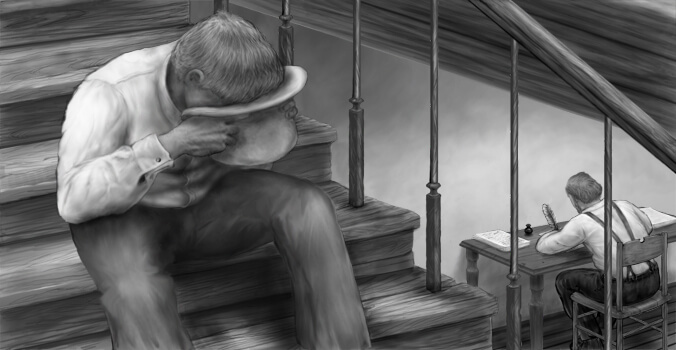
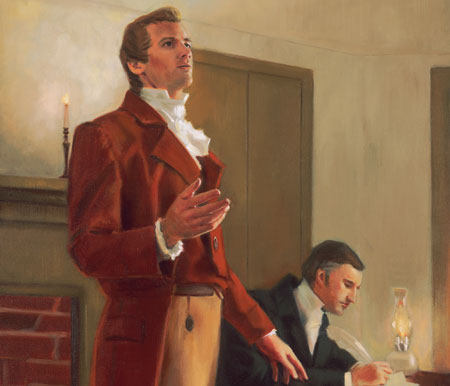
Joseph Smith First Vision


Joseph receiving Revelation


Moroni visiting a very alone Joseph Smith

What do you notice about all the pictures?

That’s right Jimmy. They are all Joseph Smith, which is interesting, but there is more… They are all receiving revelation actively. What you can see is that we expect (or at least artists expect) some kind of change, light, or brightness in conjunction with revelation.

Now, what have we not seen since Lorenzo Snow at general conference[4]?

That’s right. This kind of expected revelation. Instead, if a speaker dumps his written talk and speaks off the cuff, that is viewed as revelation.

“God hath not revealed anything to Joseph, but what He will make known unto the Twelve, and even the least Saint may know all things as fast as he is able to bear them” (Teachings of the Prophet Joseph Smith, sel. Joseph Fielding Smith [1976], 149).

This means that revelation isn’t revealed to anyone, including Joseph Smith, Jr., without the entire twelve having the same revelation. Think about how many things have been taught that are not by revelation (earrings, beer being forbidden, changes to scriptures, etc.) that were acted upon without this kind of revelation.

Personal Revelation

This principle is a two-edged sword. It allows individuals to say things that are “intuition” or “gut feelings” as though they came from God himself. This process comes without any sort of verification.

For example, we all know the story of the BYU attending male who receives revelation that a BYU attending female must marry him. What most people don’t know is that this is part of the religion that can be traced straight back to Joseph Smith. Joseph told Emma, Joseph Knight, and others that he could not retrieve the plates without Emma being his wife, and this convinced the others to help him elope with her.

Personal revelation allows good men to demand bad things without requiring the engagement of cognitive thinking.

Let’s say that a stranger on the street comes up to you and says that he/she has a message from God for you. How could you verify such a statement? Would a feeling inside you be sufficient? Depending on how charismatic the person was, it could definitely skew the feelings inside you as the listener.

Imagine that you felt that God had spoken to you about a neighbor. How would you convey the information to that neighbor in a way they would believe it? How could you verify that God spoke to you?

Verification is a very important step in communication. In the corporate world, often times VPs and directors learn that, by attaching the CEO’s name to a project, it will get done faster. Sometimes they will say that a project comes from the CEO, when really it is their own project. Confirming with the CEO is very important to distinguish between real instructions and people who just use the CEO’s name in vain.

Leadership can abuse the name of God

If leaders say something comes from God, and it does not; they are committing a sin according to religion.

Here is what God has to say about prophets who lie:

Isaiah 9:14-15[5]

God says he cuts off elders who mislead, and compares prophets who lie to the “tail” or “ass.”

Here is what God has to say about those who use his name in vain:

Exodus 20:7[6]

Got that? That is number 3 on the list of commandments. Higher up than adultery, murder, lying and so forth is the commandment not letting leadership use God’s name when He isn’t speaking.

How can we tell when leadership is speaking for God?

Speaking as a man

Many times, faithful members of the LDS church will say that prophets and apostles, when decreeing some bit of revelation that is now long in the past, were, “Speaking as men.” What this phrase could be restated as is, “They were using God’s name in vain.”

That is, they were claiming revelation when they really did not have revelation. The entire Journal of Discourses has been classified as such. Brigham Young, himself, declared that the Journal of Discourses was scripture like the Bible:

“I say now, when they [his discourses] are copied and approved by me they are as good Scripture as is couched in this Bible…” (Journal of Discourses, vol. 13, p. 264; see also p. 95).

That means that all the words in them are “using the name of the Lord in vain” when they claim to be revelation. That makes Brigham Young, Heber C. Kimball, Lorenzo Snow, and any number of early church leaders “asses” in God’s eyes.

In order to not be misled, we are cautioned against false revelation from leaders, both from the secular, rational world as well as in scripture.

Obedience is required for revelation

Why is obedience important as we seek revelation from God? Elder Dallin H. Oaks taught, “The way to revelation is righteousness” (The Lord’s Way [1991], 34). He also taught, “We cannot have the companionship of the Holy Ghost—the medium of individual revelation—if we are in transgression or if we are angry or if we are in rebellion against God’s chosen authorities” (“Teaching and Learning by the Spirit,” Ensign, Mar. 1997, 9).

Therefore, if we find leaders who are not repentant of errors, we can dismiss them as not being worthy of revelation and being asses if they claim revelation.

This would include:

Joseph Smith lying about polygamy,

Brigham Young speaking after the Mountain Meadows Massacre,

Wilford Woodruff performing marriages after the manifesto,

Joseph F. Smith claiming that he never had a revelation (except to know the Book of Mormon was true) during the Reed Smoot hearings,

Gordon B. Hinckley stating that he was not sure that we teach that man can become God, and then teaching in general conference that it was a sure thing.

Focus on the things of God rather than the things of the world

Doctrine and Covenants 25:10; 30:2.

I would add D&C 121:34-35,

“Behold, there are many called, but few are chosen. And why are they not chosen? Because their hearts are set so much upon the things of this world, and aspire to the honors of men…”

Building malls, owning .7% of Florida, cattle ranches, exclusive elk hunting game preserves, making millions of dollars, and sitting on the board of directors of many companies. These are honors of men and things of this world.

What does the scripture say about people who try to hide the fact that they do these things?

“Amen to the priesthood or the authority of that man” (D&C 121:37). When the church decided to hide its finances in 1959, it essentially undertook to hide its sins as an organization.

Even by their own canon, it is clear to see that they have forfeit their rights to revelation, if they, indeed, ever had such a right.

Conclusion

The official lesson focuses only on how the individual must be cautious, prepare, and put great effort into receiving revelation, but fails to apply those same standards to the leadership and organization itself.

This is misdirection at best, and downright dishonesty at worst. Indeed, they do this under the guise that they speak for God, and are guilty of taking the name of the Lord in vain in this very lesson.

What a bunch of asses those elders on the correlation committee are.

Posted in Institute for the Exploring Mormon | 2 Comments

Stamp Collecting and God

The story was retold here (14th paragraph about Jose Garcia).

I don’t know if they still tell this story in the MTC, but I want to offer my perspective on it (forgive me if my memory isn’t perfect, it’s been over a decade; but the main points stuck with me).

In one of the LRTs (Large Room Training, everything is better with acronyms), they told the story of a kid who wanted to go on a mission and all he possessed in the world was a stamp collection. The stamp collection was worth $2,000. The question was brought up to President Kimball whether the young man should be asked to sell his stamp collection to pay for his mission.

After a moment, President Kimball said, “Yes, have him sell his stamp collection. There are a great many letters that pass through the church from every nation in the world. Order that all of the stamps be saved. At the end of his mission, let us present him with the stamps. He shall have the finest and grandest stamp collection anywhere.”

This was met in the MTC with general thoughts about how inspired President Kimball was to give such advice. How, clearly, God cared about people individually.

For me, it was the opposite reaction. You see, I am a collector, and I happen to know that stamps that have been sent through the post are not valuable. It is UNUSED stamps that have worth. Hence, the missionary sold something very valuable (he came from Mexico, if I remember, and $2000 was a LOT of money for the family) and was returned with good efforts that had no value.

To me, receiving such a thing would at first be a great show that people loved me and were trying, but after thinking about it, I would be forced to consider that; either God doesn’t care about stamp collecting, or the idea and effort was not inspired.

As a collector and member, I’ve often wondered which of the two this returned missionary decided was the reason God asked for his valuable possession, and returned something of no value.

(Relevant Scene from Brewster’s Millions)

Posted in Current issues, GA Bullsh*t | Leave a comment

“Anti-mormon”

Can someone explain to me what it means?

Personally, my definition is “Anything that was made up, is false, or intentionally distorts the true history and doctrine of the church.”

Got that?

If a person’s definition is “Anything that disagrees with me,” or “Anything that makes me feel bad,” there is a good chance they are going to call me anti-mormon. Those definitions aren’t really fair.

I mean, by this definition, learning that Joseph Smith had 33 wives could make the person declare the claim anti-mormon, even when the person making the claim is pro-mormon: BYU professor talks about Polygamy.

You could, in fact, claim anyone is anti-mormon, including Brigham Young (like when he teaches that Adam is God. You don’t like it? Well, it is anti-mormon!).

So let’s just standardize the definition.  If you are going to call me “anti-mormon,” you need to point out where my history is wrong, or where something is “intentionally distorted.”  Otherwise, it’s just name calling.  If someone is going to cite a source as “anti-mormon” in a comment, that’s fine, but I’m going to press them for the same information.

I hope to correct anything that is inaccurate or intentionally misleading so that this site can in no legitimate way be called “anti-mormon.”

Posted in Current issues, Housekeeping | 2 Comments

Book of the Dead funerary rite from Ancient Egypt

This is from the book of the Dead. It is a funerary text from Ancient Egypt.

Posted in Translation | Leave a comment